Original records. Family connections. Questions you can take to your doctor.
What did your grandfather die of? And what can you find out about the generations before him?
Medical genealogy uses historical records to investigate a family’s recorded health history. Our family medical history research connects available US and Polish death records with the evidence needed to identify the relatives they describe.
Family stories often leave out the details. We search US and Polish death records, establish which relatives they belong to, and organize the recorded information into a documented family history in English.
For Americans with Polish roots who want to replace an uncertain family story with evidence they can discuss with a healthcare professional.
Genealogical research, not a medical assessment. A recorded cause of death can be a useful clue. It cannot establish that a disease was inherited or predict your own health.
Four dedicated projects: $3,450 / $5,850 / $8,350 / $11,550 USD for 10 / 25 / 50 / 100 research hours. Compare the scopes.
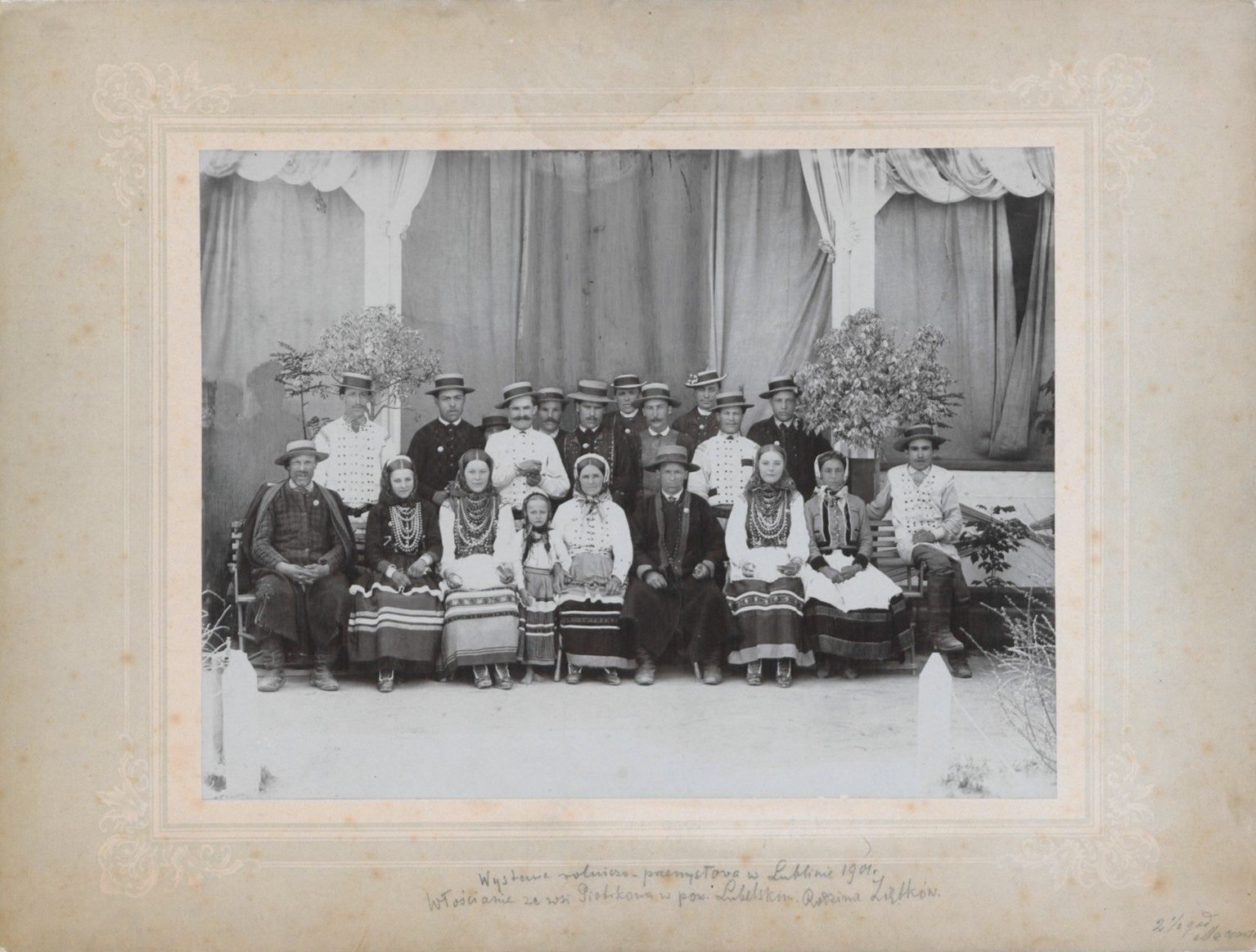
Start with one person, then follow the evidence
Perhaps you know that your grandfather died in Pennsylvania, but the family remembers only that it was “something with his heart.” Your first question is what his death certificate actually records. A later research stage might investigate his parents in Poland, once their identities and home parish are established.
We agree on the priority questions in your research plan. Finding a US record, proving the link to Poland and tracing several generations may require separate stages. Choose a dedicated 10, 25, 50 or 100-hour project; a larger budget supports more research, not a guaranteed number of generations or medical findings.
Why this research takes more than finding a death certificate
A name in an index is only the beginning. We must establish that the entry belongs to your relative, connect that person to earlier generations and trace the family across the Atlantic. Americanized names, uncertain ages, changing borders and place names can send a search toward the wrong family unless the evidence is checked carefully.
- Two countries, several record systems: a US certificate may point to a Polish locality whose records are divided between civil, parish and archival collections. Survival, digitization and access vary.
- Handwriting and languages: Polish, Russian, German and Latin entries require careful transcription and translation. An illegible word or a historical disease label must stay marked as uncertain when it cannot be read reliably.
- Relationships must be supported: finding two people with the same surname is not enough. Births, marriages and other evidence help establish whether they belong to the same family line.
- Medical detail needs context: a recorded cause of death, an obituary and a family recollection are different kinds of evidence. We preserve those distinctions and document missing or conflicting information.
We investigate available documents in both the United States and Poland. We select relevant collections on each side of the Atlantic and compare their evidence within your agreed scope. This gives the search a broader basis than relying on one country or one database, while avoiding any promise that a particular record or medical answer will survive.
Family evidence can support important health conversations
Knowing more about your family may help you ask better questions about your own health. The CDC explains that family health history can help a healthcare provider decide which screening tests or other interventions are appropriate and when. A provider may also consider referral for genetic counseling.
For some families, previously unknown information about a serious illness in a close relative could make a medical conversation more informed and timely. That is a potential benefit of better family information, not a measured outcome of our service. We cannot estimate a health benefit, promise to prevent illness or claim that an archival investigation will save a life.
Could the records show that an ancestor had a serious disease?
Sometimes a death certificate explicitly names a serious condition, such as a cancer or heart disease. Where a relevant, accessible record contains that information, we can document its wording, identify the person and report the recorded age at death. Other entries may be vague, incomplete or contain no medical detail at all. We do not diagnose an ancestor from circumstantial clues.
Our report can help separate an undocumented family story from what surviving records actually state. Your healthcare professional can then consider that evidence alongside your current clinical family history. A remote ancestor’s certificate may add historical context without changing your care; its relevance depends on the condition, relationship and reliability of the evidence.
What we investigate
- US death certificates: locate available historical images or identify the office and application route for a restricted record. We check whether the available copy includes cause-of-death information.
- Polish death and burial entries: search the relevant surviving registers once the locality and family are identified. The information recorded varies by period, region and register.
- The family connection: use birth, marriage and other records as needed to distinguish people with similar names and support the relationship between generations.
- Supporting evidence: compare obituaries, cemetery records and other accessible sources. We distinguish a family statement or newspaper account from a medical cause recorded on a certificate.
How to find an ancestor’s cause of death
Start with where and when the person died, then identify the office or historical collection holding the death record. A death index, gravestone or short certificate may establish a date without providing a cause. We look for the available record that actually contains the medical entry and check its identity against other family evidence. Access to that detail can be restricted.
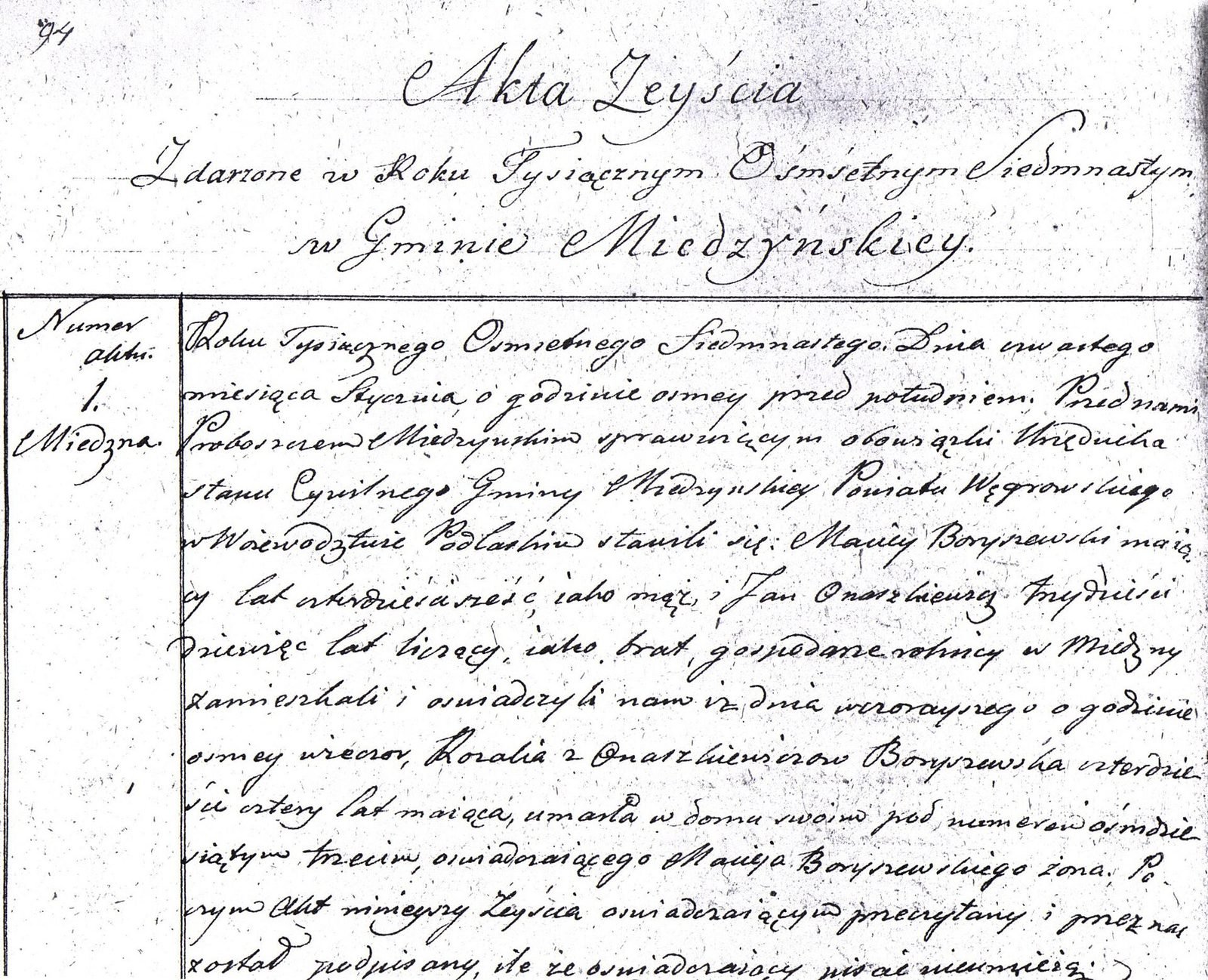
A death certificate cause-of-death entry must be read in its original context. In Polish research, a parish burial register and a civil death record may preserve different details. Our report separates the recorded wording, its English translation and the information that remains unknown.
What you receive
- An English research report with images of records obtained and full source references.
- Transcriptions and English translations of relevant entries, preserving the original wording and marking illegible or uncertain text.
- A summary for each relative researched: relationship, dates, age at death, recorded cause if present, source and unresolved questions.
- A clear distinction between documented facts, family recollections and information the records do not provide.
- A search log, including unsuccessful searches, access restrictions and practical next steps.
If similar wording appears in more than one record, we can place the entries together for comparison. Whether that similarity has medical significance is a question for your physician or genetic counselor.
What death records can and cannot tell you
The CDC recommends collecting family health history and, where possible, consulting death certificates and family medical records. Historical records can help fill gaps in that history.
A certificate may record an underlying cause, contributing conditions or only a broad description. Older terminology can be ambiguous, and a death record can be incomplete or inaccurate. We preserve what the document says and flag uncertainty rather than turn an old term into a new diagnosis.
A missing disease name does not show that a relative was free of that disease. Two relatives with the same recorded condition do not establish an inherited disorder. Age at death is not the same as age when a disease began.
We do not provide diagnoses, genetic testing, hereditary risk scores, screening recommendations or medical advice. Take health questions and the documents to a qualified healthcare professional. See the CDC guidance on limitations in cause-of-death reporting.
Access matters, especially for recent US deaths
The correct office depends on where the death occurred. The CDC directory of vital records offices is a starting point. Access requirements and the information released depend on the jurisdiction and record.
For example, New York City distinguishes the death certificate from its confidential cause-of-death report. A grandchild is among the eligible relatives for both, while great-grandchildren are listed for the certificate without the medical report. Only entitled parties and their attorneys may submit these orders. We can identify the route and explain the instructions; the eligible applicant must apply directly when required.
In Poland, an archival register entry, a civil death certificate and a medical death card are different documents. We check the relevant collection rather than assume that ordering a civil certificate will reveal a medical cause. Hospital files, autopsies and confidential medical records are not included in this service.
Choose your research scope
These are dedicated document-based family health history projects, with separate prices from our general genealogy packages. Every level includes research in relevant available US and Polish collections, images of records obtained, English translations, source references and a written report. The agreed research hours cover searching, archive correspondence, analysis, translation and reporting.
Focused Research
$3,450 USD / 10 research hours
A focused investigation of one clearly defined question about a deceased relative, using relevant available records in the United States and Poland.
Family Line
$5,850 USD / 25 research hours
A broader investigation along one family line, connecting relatives and comparing available death records and supporting evidence in the United States and Poland.
Extended Research
$8,350 USD / 50 research hours
Extended research across selected family branches, with more time to resolve identities, connect generations and compare available evidence in the United States and Poland.
Comprehensive Research
$11,550 USD / 100 research hours
Our largest research budget for a complex family investigation across selected branches and collections in the United States and Poland, with a consolidated report and documented gaps.
Before research begins, your written plan identifies the relatives, priority questions, collections, available hours and proposed delivery schedule. Access restrictions and archive response times affect what can be completed and when. Archive copying fees are included; clinical services, DNA tests and medical interpretations are not part of these packages.
If you must apply personally for a restricted certificate, any government application charge paid directly by you is separate from our research fee. We identify that requirement in the plan before research begins. No record, cause-of-death entry or specific finding is guaranteed.
Choose a project and pay through its secure Stripe link, then follow the checkout confirmation to submit your family details. Write “Family Health History” and name the deceased relatives you want us to investigate. We email your research plan within two business days of receiving both payment and your order details.
Plan-First Guarantee for all four family health history projects: if you decide not to proceed after reading the plan, tell us within three business days of receiving it and we refund 100% of your payment. No research hours are used during that review period unless you ask us in writing to start sooner. Our Refund Policy also explains cancellation and documented negative results.
Additional hours or a further stage require a separate agreement. We do not add work or charges automatically. See our other genealogy services if your goal is a general family history rather than this dedicated investigation.
What to prepare after payment
- The deceased relative’s full name, spelling variants, approximate dates and place of death.
- Your relationship to that person and the names connecting the generations.
- Existing death records, obituaries, family papers and any known Polish locality.
- One clear research question. Mark family recollections as unconfirmed.
Send only what is needed for research on deceased relatives. Do not upload your own medical records, genetic test results, Social Security numbers or health information about living relatives through the general order form. If an office needs proof of identity or entitlement, follow its official application process. See our Privacy Policy.
Questions before you begin
Why is family medical history important?
Documented information about deceased relatives can help you discuss gaps in your family health history with a healthcare professional. A provider decides whether a finding is relevant to screening or genetic counseling; an archival report does not itself establish inherited risk.
Can you tell me whether a disease runs in my family?
We can document what the available records say about specific relatives and support their family relationships. A physician or genetic counselor must assess whether those findings suggest an inherited condition.
Will a Polish death record include a cause of death?
Not necessarily. Some historical registers include a cause; others do not. We report what the actual entry contains and do not substitute an assumption when the field is absent.
Can you obtain my grandfather's US certificate for me?
We can research public historical collections and identify the appropriate office for restricted records. Some jurisdictions require an eligible relative or attorney to apply. Hiring a genealogist does not override those rules.
What if no record or medical detail is found?
Your report documents the searches completed, sources checked and remaining options. Payment covers research time and reporting, not a guaranteed discovery. The existing refund policy applies.
Can I share the report with my doctor?
Yes. It provides source documents and a summary of recorded information for you to discuss. It is a genealogical report and does not replace a clinical family history or medical consultation.
Explore the records behind the research
- US death records and obituaries
- Polish death and burial records
- Genetic genealogy and DNA match analysis: a separate service for family relationships, rather than medical interpretation.
- How research works and all services and prices