USCIS Proposes Limiting Its Genealogy Program to Records It Still Holds
Archive News · USCIS Genealogy Program
On August 21, 2026, the Department of Homeland Security published a proposed rule for the USCIS Genealogy Program. The program would cover only historical records that are still in USCIS custody, and requesters would be sent to the National Archives (NARA) for files already transferred there.
What the proposal says
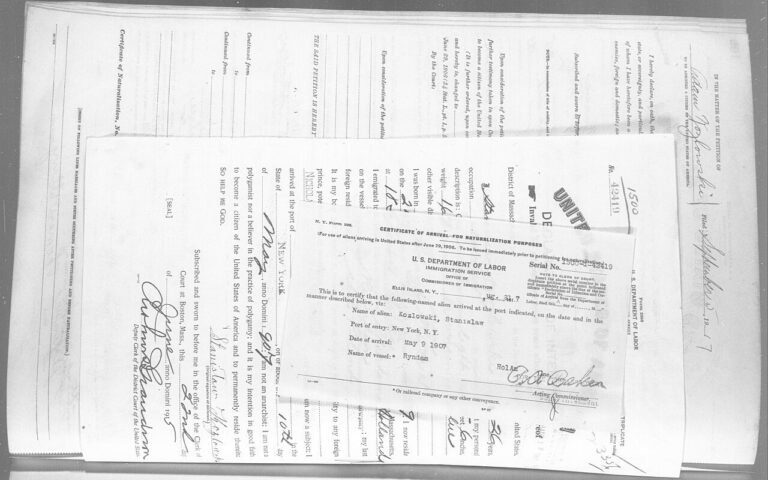
The Genealogy Program provides historical immigration and naturalization files: naturalization certificate files (C-files) from 1906 to 1956, visa files from 1924 to 1944, registry files from 1929 to 1944, and Alien Files numbered below 8 million with documents dated before May 1, 1951. The notice states that over time all of these designated historical records will be transferred to NARA. USCIS would post a notice on its Genealogy page whenever a set of records moves.
The rule would not change fees. The notice gives the current fee as $80 for paper filing and $30 for online filing of each Form G-1041 or G-1041A. Written comments are due on or before October 20, 2026. This is a proposal, not yet a final rule.

Why it matters for Polish-American research
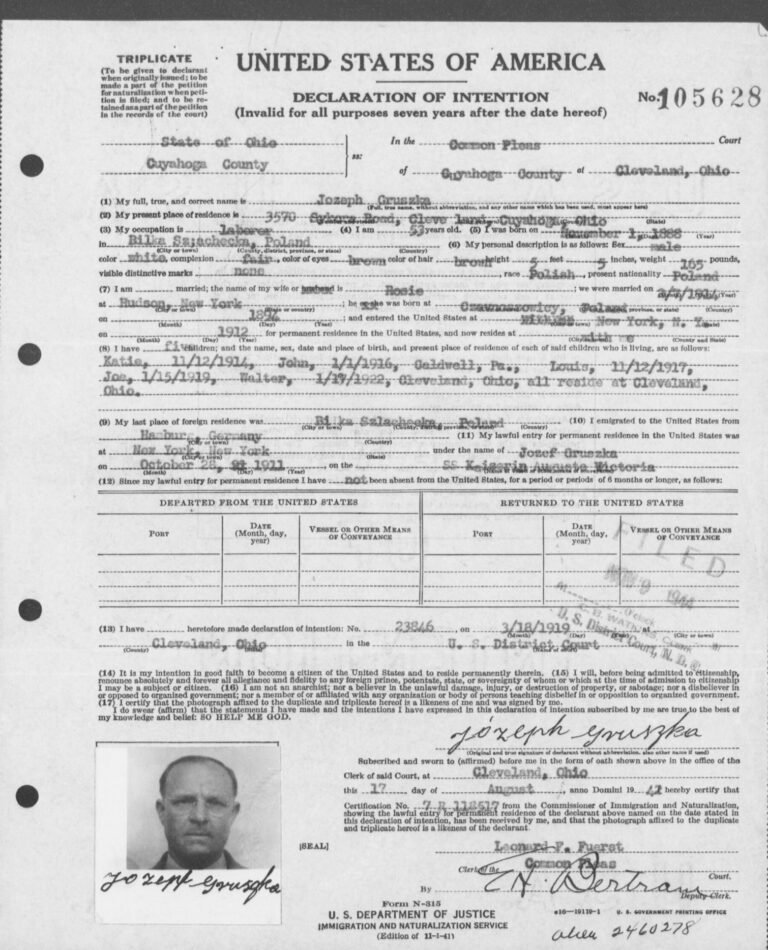
For a Polish immigrant naturalized after 1906, the C-file can hold the declaration, the petition and the certificate in one place, with the town of birth, the ship and the date of arrival. Visa files from 1924 to 1944 often include a birth certificate and a photograph. As these files move, the right place to ask will increasingly be NARA, not USCIS.
What you can do now
- Before filing Form G-1041, check whether the file you need has already been transferred to NARA.
- Keep the file number from any earlier index search: it is the key for a records request at either agency.
- Read the proposed rule on the Federal Register if you want to submit a comment by October 20, 2026.
Sources and research tools
- Federal Register, August 21, 2026: Genealogy Program Regulations To Clarify the Impact of Federal Records Requirements
- USCIS: Genealogy
How we can help
When a change opens a new record for your family, we can fold it into a research project: we order or read the record, compare it with your other documents and follow the trail to the parish in Poland. See the research projects for scope and prices.
Keep reading
The USCIS Genealogy Program explained