1900 Census Records: Find Birth and Immigration Clues
American Genealogy Records · 1900 Census Records
The 1900 census can turn a broad family story into a set of questions you can investigate. A household entry may record a birth month and year, an immigration year, and information about citizenship. For a Polish immigrant family, those clues can guide the search for an arrival record, a marriage, or the correct ancestor in Poland.
Why the 1900 census is useful for family history
The federal population schedule records people within households, with relationships to the head and several questions that are especially useful for immigrant research. It is a snapshot, not a complete biography. Read the page image and its headings instead of relying only on a search index.
Start with the National Archives 1900 census catalog introduction for the record series and its contents. Use the original wording when you transcribe a place, name, or status. An index can omit a column or misread handwriting.
Where can you search 1900 census records online?
NARA’s online census resources link to providers with digitized schedules and indexes. FamilySearch is listed as free with account creation; other access options may depend on a subscription, a library, or an institution. Check the provider’s current access conditions rather than assuming that every result is freely downloadable.
- Begin with a person whose household and approximate residence you already know.
- Choose the 1900 US federal population census collection.
- Search a documented name variant and a reasonable birth-year range.
- Compare spouse, children, neighbors, and occupation before accepting a candidate.
- Open the image, read the headings, and save a full reference.
Read the birth month and year alongside the age
The schedule asks for month and year of birth as well as age at the last birthday. Those answers can disagree. Treat the conflict as something to investigate, not a reason to select whichever date fits your tree most conveniently.
The official census date was June 1, 1900, even if an enumerator visited later. NARA’s census clues guide explains why census day matters when interpreting age. A person with a birthday later in the year would not yet have reached that year’s next age on census day.
Build a comparison note with three fields: the birth entry as written, the stated age, and the source date. Then compare it with a civil or parish record. A census birth month narrows a search, but it does not have the same origin as a record created at the time of birth.
Immigration year: a lead, not a passenger-list identification
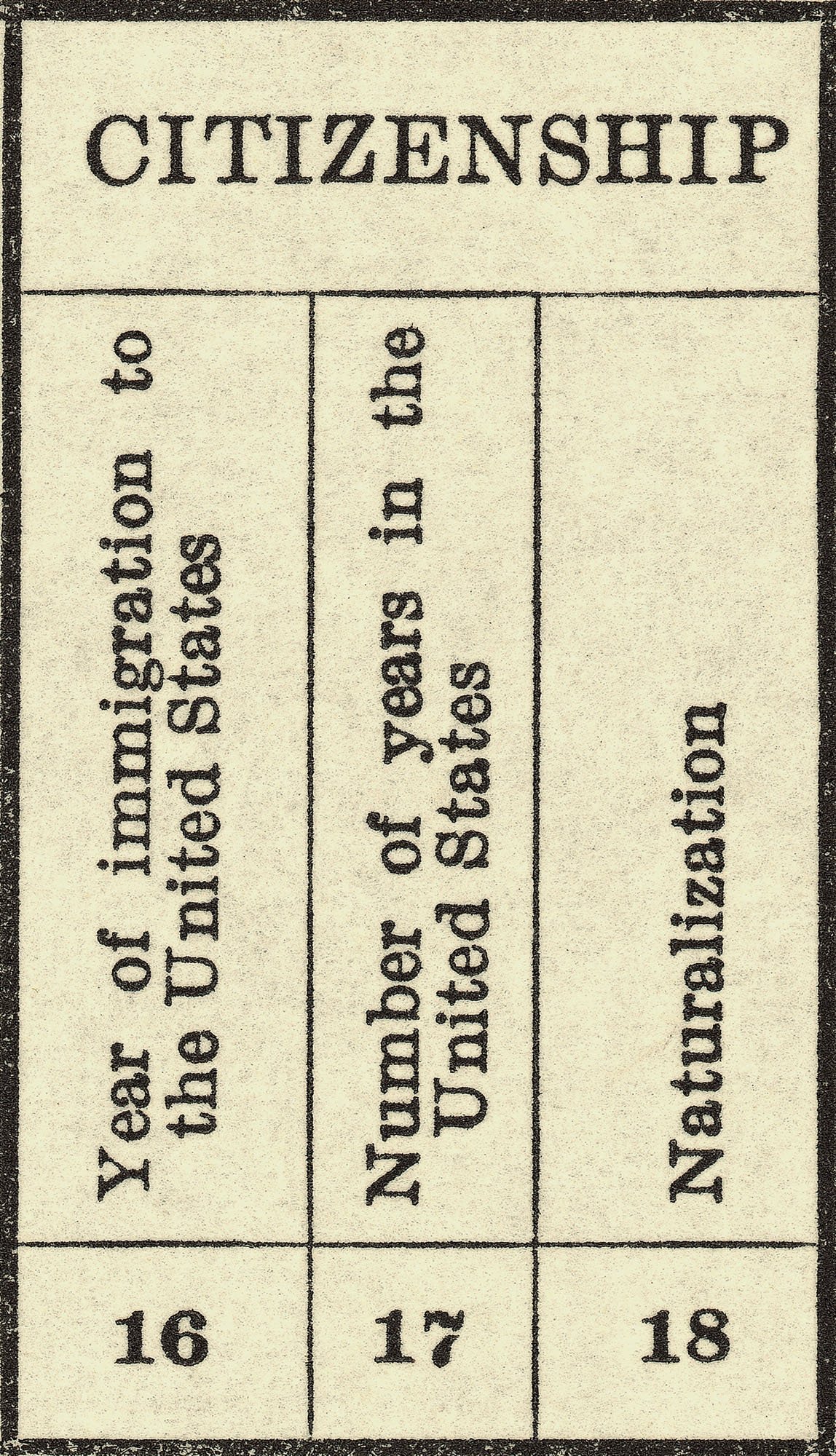
The citizenship section includes a reported immigration year and number of years in the United States. Inspect the two together. A transcription error or inconsistent answer may become visible when you do the arithmetic. Keep the recorded values rather than correcting the image in your notes.
Use the reported year to create a search range for passenger manifests. Compare the candidate passenger’s age, companions, destination, and residence details with the household. An immigration year alone cannot establish which person on a ship was your ancestor.
Consider every foreign-born household member separately. The adults and children may not have traveled together. A family story about one arrival can hide several journeys, and later records may provide different estimates.
What do Al, Pa, and Na mean?
The 1900 enumerator instructions distinguish Al for a person who had taken no steps toward naturalization, Pa for someone who had declared an intention, and Na for a naturalized citizen. The instructions limit the naturalization question to foreign-born males aged 21 and over. A blank for a woman or child should not be interpreted as a failed citizenship search.
These are census reports of status, not citizenship certificates. They do not identify a court or replace the underlying naturalization documents. Use a recorded status to choose a next search, then investigate the appropriate naturalization records.
Follow the household into another census year
Create a short household timeline with the names and ages of the people who appear together. When you compare 1900 with a later schedule, use the headings for that later year. Questions and column order changed. A mark in the same physical position on another form may describe something different.
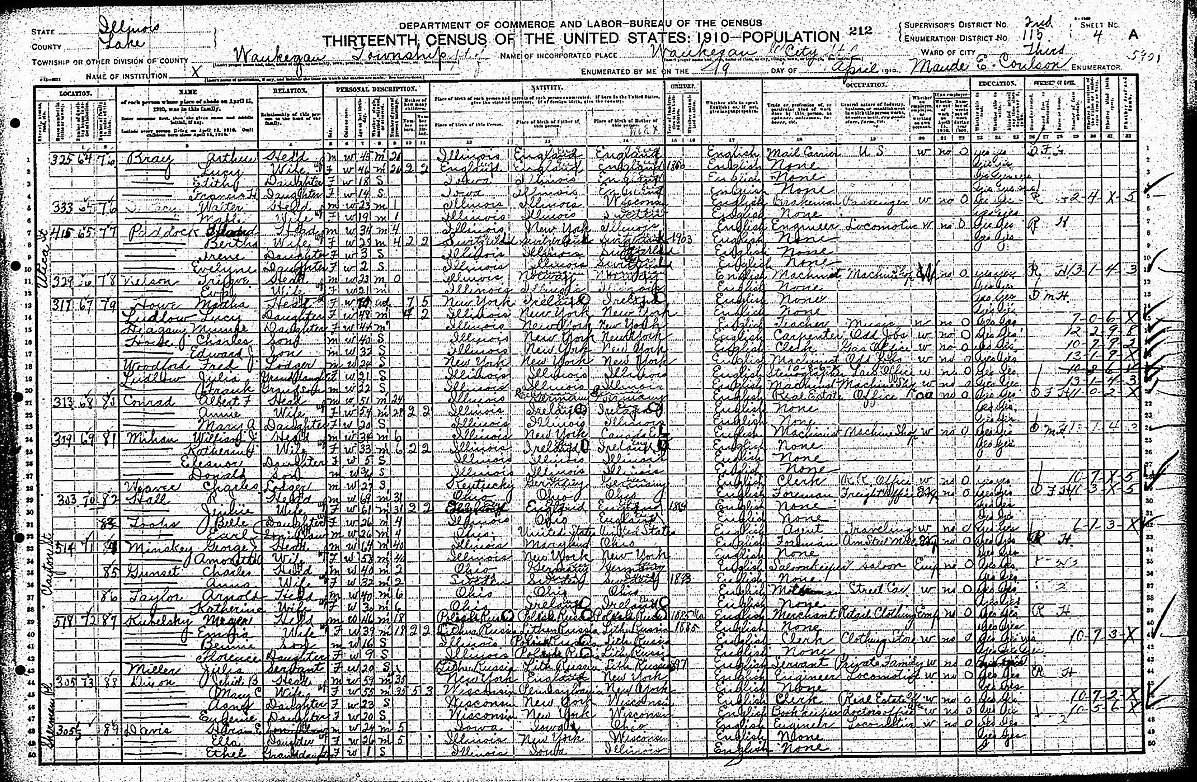
Compare people who should belong to the same household, but allow for deaths, marriages, moves, and independent children. Missing from one household does not necessarily mean missing from the census. Search a married child, sibling, or other relative when the expected household cannot be found.
Use birthplace and family clues without inventing a village
A broad birthplace does not identify a parish. Preserve country and region wording exactly, including differences between an ancestor’s own birthplace and the birthplaces reported for parents. Then use more specific documents to investigate the locality. Do not convert a broad country entry into an exact modern Polish town.
The questions about marriage duration and children can point to family events worth researching. They do not supply the missing certificates. If a household suggests an earlier child or a marriage before immigration, write that as a research question and seek direct evidence.
What to try when a name search fails
- Search a spouse or child whose name may be easier to recognize.
- Try documented Polish and Americanized first-name forms rather than assuming one fixed spelling.
- Use a known address, locality, and enumeration district to investigate images when name indexes fail.
- Check neighboring pages and households, keeping identity tests separate from surname similarities.
Save enough information to find the page again
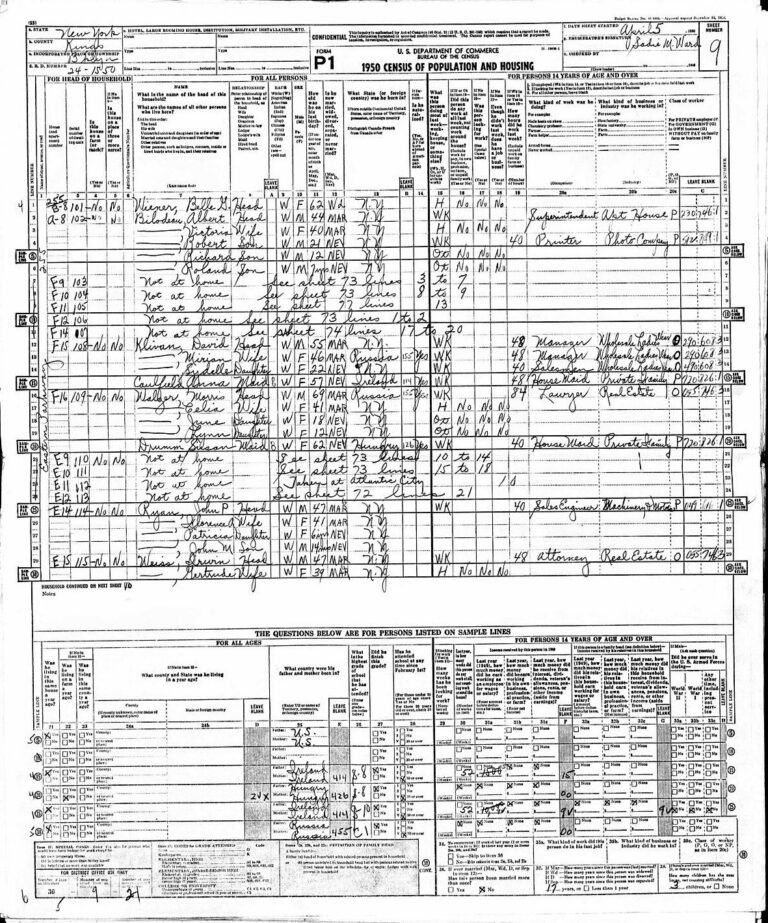
Record the year, state, county, locality, enumeration district, sheet or page, and household identifiers shown on the source. Add the website and image reference you actually used. Save the image with its headings, not only a cropped line that loses the context needed to interpret it.
Finish with a next-step list: a passenger search range, a naturalization inquiry, a missing child to investigate, or a birth date to test in Polish records. This turns a census discovery into a research plan rather than an unsupported addition to an online tree.
1900 census questions
Does the census give an exact birth date?
It asks for month and year, not a full day-month-year birth date. Compare the reported information with birth and other records, especially when the age does not agree.
Does Na prove where someone became a citizen?
No. It is a reported status. Find the actual naturalization documents and identify their court before drawing a conclusion about the process.
Can I use the 1900 census to find a Polish village?
It can guide the investigation, but broad birthplaces commonly need more precise evidence. Combine the household with arrivals, vital records, and naturalization papers.
Sources and research tools
- NARA: 1900 federal population census introduction
- NARA: online census providers
- NARA: clues in census records
- Census Bureau: 1900 enumerator instructions
- Census Bureau: citizenship section of the 1900 schedule
How we can help
PoloniaRoots researches American and Polish documents to test family connections and identify the right ancestral locality. Review our research projects and prices, choose a scope, and complete payment before sending family details through the order form. Include your existing documents, source references, and unsuccessful searches. The outcome depends on surviving evidence; a particular discovery cannot be guaranteed.