Pedigree Chart: Build a Documented Family Tree
Genealogy Research · Pedigree Chart
A genealogy pedigree chart follows a person’s direct ancestors: parents, grandparents, and earlier generations. It is a map of the relationships you are investigating. A family group sheet answers a different question by collecting a couple and their children. Use both to keep the direct line readable without losing siblings, additional marriages, and the records that may explain an immigrant’s origins.
Choose the chart that fits the question
| Tool | Best use | Limitation |
|---|---|---|
| Pedigree or ancestor chart | Follow direct ancestral lines backward | Usually leaves out most siblings and cousins. |
| Family group sheet | Study parents and children as a family unit | Needs linked sheets for additional family units. |
| Descendant chart | Follow branches forward from an ancestor | Can become large and include private living-person details. |
| Research log | Record sources checked and questions remaining | Does not replace the relationship chart. |
If your question is where your grandfather’s parents were born, an ancestor chart gives a useful overview. If his sister’s marriage might identify their hometown, you need the family group sheet too. The second tool makes collateral relatives visible instead of leaving them outside the research plan.
Start with a free genealogy chart
The National Archives charts and forms page links to an ancestral chart and a family group sheet. Download the type you need, or use a notebook with equivalent fields. Start with a manageable number of generations. A short, documented chart is easier to improve than a large diagram assembled from unverified online trees.
- Choose the starting person and write the name consistently.
- Add each known parent with dates and places supported by your records.
- Attach a source reference to each fact or link in a companion note.
- Mark uncertain connections as uncertain rather than filling every box.
- Create a family group sheet where siblings or additional marriages matter.
- Choose one missing link as the next research question.
What to write in each person’s entry
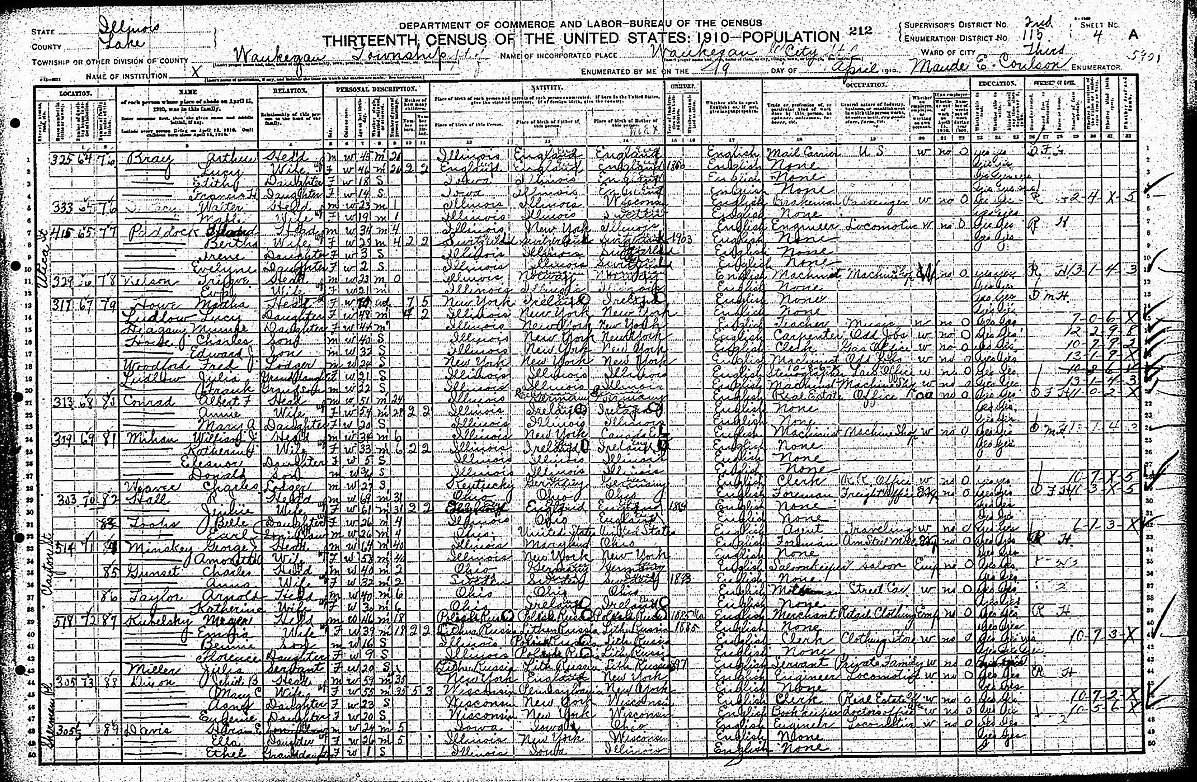
Use the name by which you identify the person in your research, then preserve variants in the notes. Include birth, marriage, and death information only to the precision the sources support. A year estimated from a census age should not become an exact birth date. Distinguish an event’s date from the later date on which it was registered.
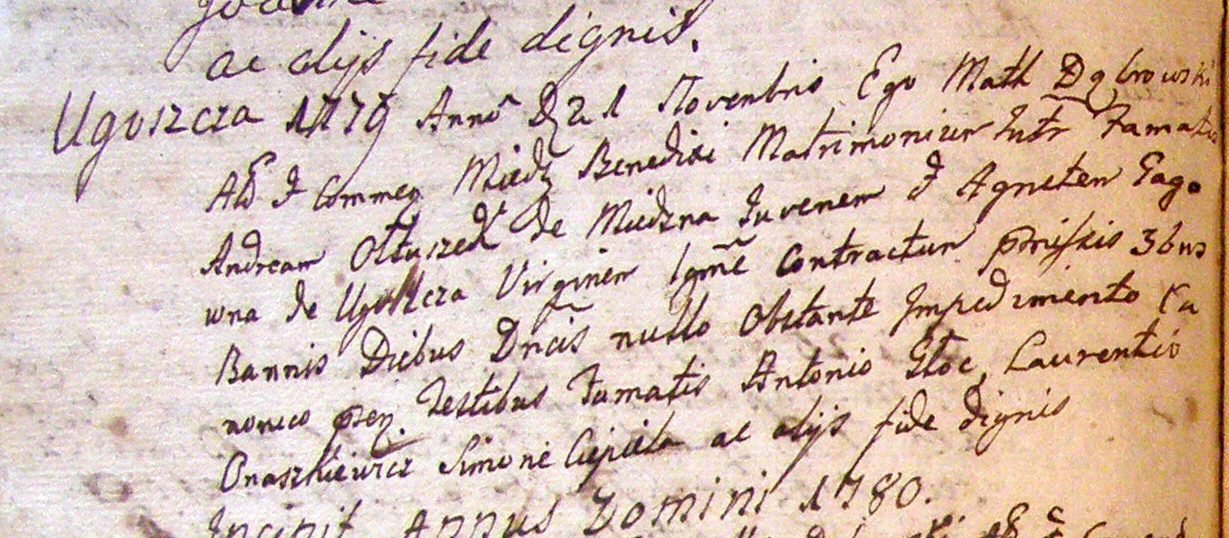
Keep the place as recorded and add a separate researched identification where needed. An American record saying Poland is different evidence from a baptism naming a particular parish. If a place name changed, record the explanation and its source rather than silently overwriting the historical wording.
Numbering or software IDs can help distinguish people with the same name. Whatever system you choose, keep it consistent and make it possible to find the person’s source notes. A number organizes the chart; it does not measure how well a relationship is supported.
Make a family group sheet for the difficult household
Add the parents, children, known residences, and event details for the family you are studying. Keep separate family units when a parent had children with different partners. Record step, adoptive, and biological relationships accurately and respectfully according to the evidence and the purpose of the chart.
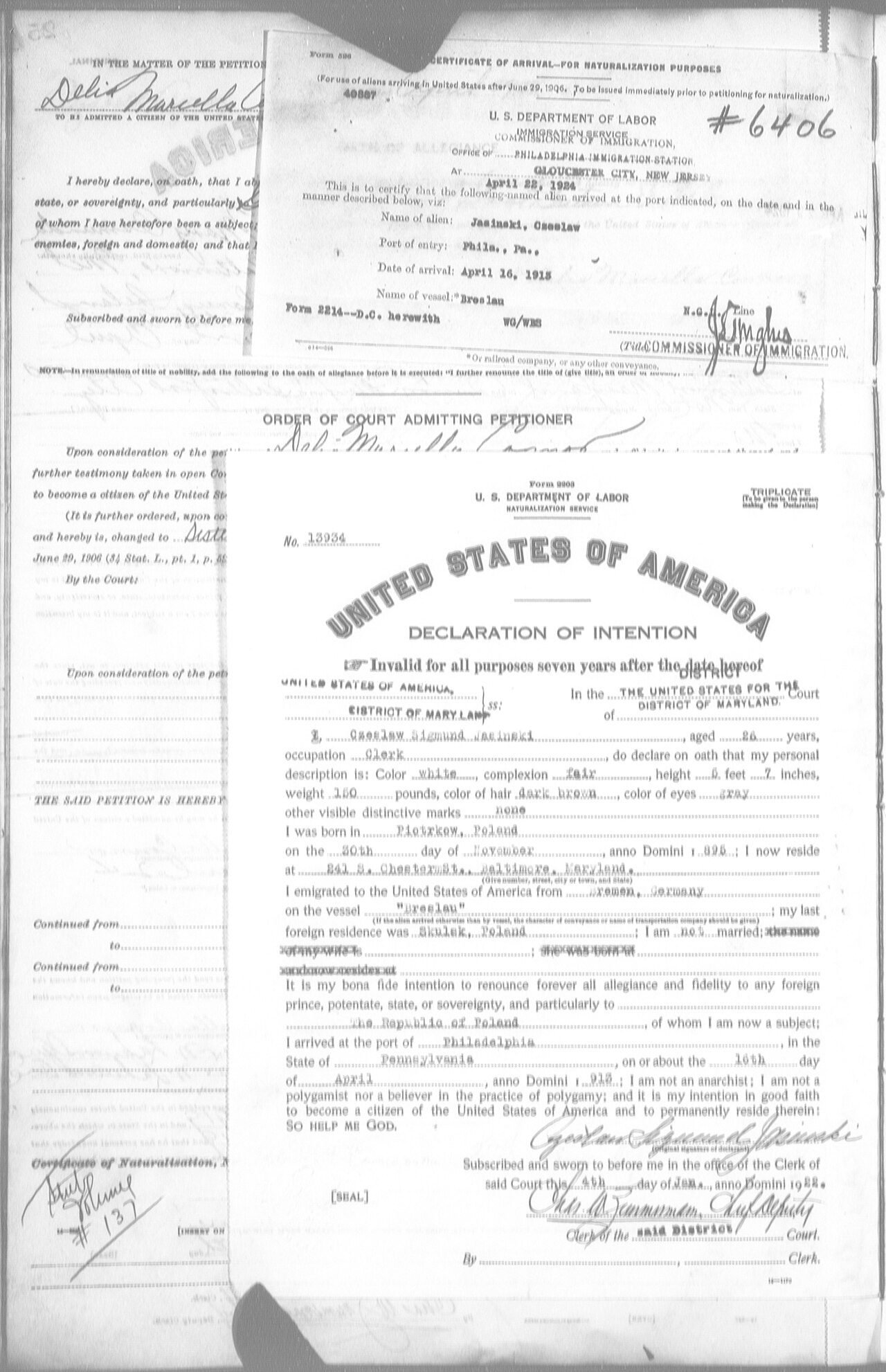
In a fictional example, your direct ancestor John has no known Polish birthplace. His sister Helen’s church marriage and his brother Joseph’s naturalization file may contain better place evidence. A pedigree chart alone can hide those siblings. A family group sheet keeps them visible and helps you compare names, ages, and addresses across records.
Add a source trail that someone else can follow
For each record, save the collection or register title, repository, place, date, page or entry number, and stable image reference when available. Keep a copy of the image together with your transcription. A search-results URL alone may stop working or lead another researcher to a different result.
| Person or link | Statement | Evidence note |
|---|---|---|
| Child to parent | A record names the parent | Record title, entry, repository, and any identity issue. |
| Birth date | Exact date or approximate year | Explain whether directly stated or calculated. |
| Birthplace | Wording as recorded | Keep modern identification and its source separately. |
| Uncertain connection | Proposed relationship | State the missing evidence and next search. |
An online tree can point toward records, but copying the same relationship from several trees does not produce several independent sources. Follow citations to the underlying documents and check that they concern the correct people. If you cannot inspect a source, note that limitation.
Review the chart for contradictions
Check whether dates, places, and family relationships fit together. A supposed parent who was too young, two incompatible marriages, or an unexplained move can signal a mistaken identification. A contradiction deserves investigation rather than a cosmetic change to make the chart look consistent.
Leave a visible gap when evidence is missing. Review one uncertain link at a time, using a research log to record unsuccessful searches as well as discoveries. Before sharing a chart, remove private details of living people and explain which relationships remain provisional. Preserve a dated private copy so later corrections can be understood.
Pedigree chart questions
Is this the same as a medical pedigree?
This guide concerns genealogical ancestry. A medical pedigree is designed for a different purpose and may use specialized symbols and health information. An ancestry chart does not establish a diagnosis or inherited risk.
Should cousins appear on a pedigree chart?
A standard ancestor chart focuses on the direct line. Put cousins and siblings on linked family group sheets or descendant charts when they are relevant to the question.
What if an ancestor appears in more than one branch?
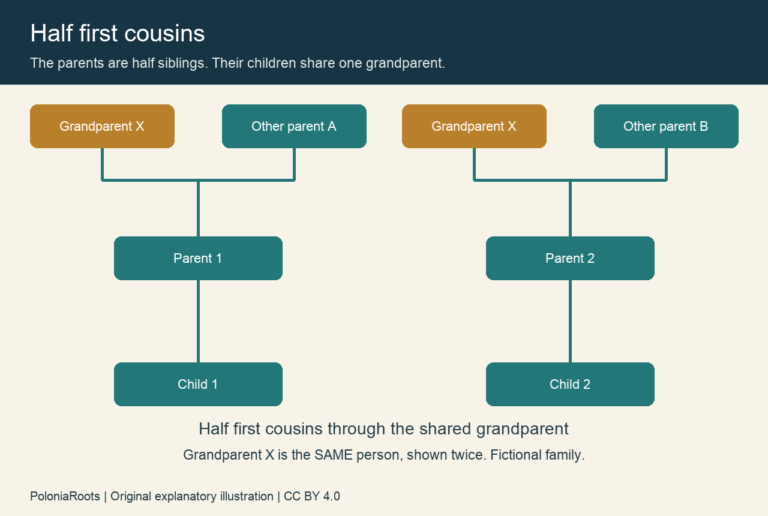
A documented person can occupy more than one ancestral position when family lines reconnect. Keep the person’s identity consistent and explain each path instead of inventing separate people to fill the boxes.
Sources and research tools
- National Archives: free charts and forms
- Ancestry: ancestor charts and family group sheets
- FamilySearch: pedigree views
How we can help
PoloniaRoots can investigate the documentary links between your American family and ancestors in Poland. Choose a research scope and complete payment before submitting family details through the order form. Include copies of records, source references, and the question you want answered. Findings depend on the evidence that survives.
Keep reading
Cousin chart and generation differences