US Records · Find Your Ancestral Village in Poland Using US Records
To find your ancestral village in Poland, work backward through the immigrant’s American records. A surname and a country label rarely identify one place. The goal is a specific locality supported by matching family details, followed by verification in the correct Polish register.
Start with a documented American identity
Build a timeline of addresses, relatives, occupations and name variants. Use censuses, marriages, deaths and the births of children to separate people with similar names. Keep a spouse’s maiden surname and each sibling’s identity in the notes. A useful town name in a document is still only a lead until the document belongs to the correct person.
Which US records can name the locality?
| Source | Locality clues to inspect | Limit to remember |
|---|---|---|
| Naturalization declaration and petition | Place of birth, previous residence and family details | The court and filing period affect the form |
| Passenger manifest | Last residence, contact abroad and birthplace when asked | Last residence and birth village may differ |
| Marriage or church record | Parents, birthplace and earlier parish | An abbreviated location may need another source |
| Death record and obituary | Reported birthplace and surviving relatives | The reporter may not know the exact village |
Look beyond the citizenship certificate
A naturalization petition or declaration can provide more locality detail than the final certificate. NARA’s holdings depend on the court that created the record; local or state court files may require a different repository. Search the actual application papers and attached documents rather than stopping at an index with a citizenship date.
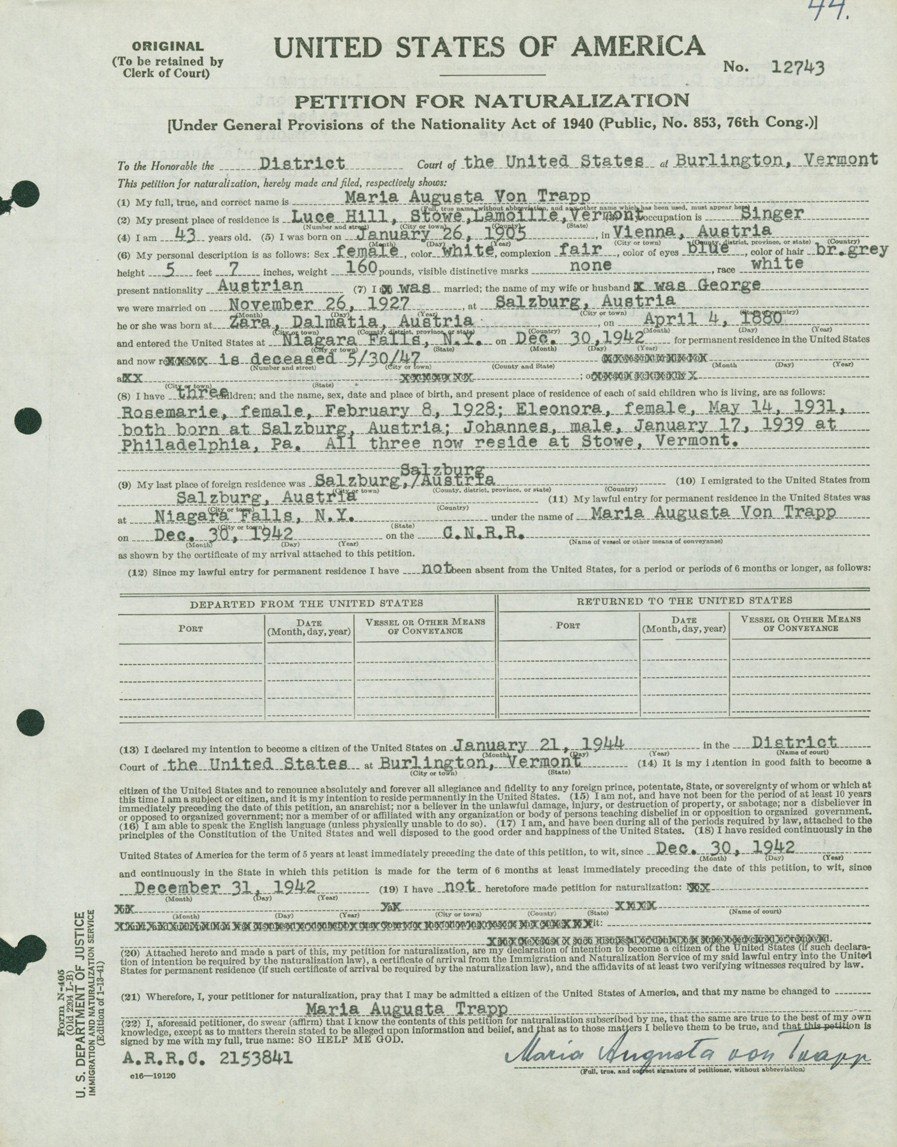
Read the complete passenger entry
Follow the row across all available manifest pages. Transcribe a foreign contact and the destination contact separately. Record whether a place is labeled birthplace, last residence or the address of a relative. Those locations may form a migration trail, but they should not be silently treated as one birthplace.
Compare locality names without guessing
- Copy the spelling exactly from the image and mark doubtful letters.
- Record the date and printed label of the locality field.
- Collect independent spellings from the immigrant, spouse and siblings.
- Identify possible historical jurisdictions and nearby towns.
- Locate the parish or civil office serving each candidate village.
- Test the candidate against parents, dates, spouse and siblings.
Many villages share a name. A modern search-engine match may point to the wrong province. Preserve Russia, Austria or Germany if that is what an American record says; historical nationality and a modern Polish address answer different questions. Also distinguish a village from a district, parish seat or departure port.
Verify the connection in Polish records

Once a locality is plausible, search the Polish State Archives portal and the relevant parish or civil-register inventories. Confirm the record type and year coverage before browsing scans. A catalog entry may describe a surviving volume even when no images are online. A name index can locate an entry, but read the original before treating the relationship as established.
The register should fit the American evidence in several ways: the birth date or age, parents, mother’s maiden surname and relevant family relationships. A house number or sponsors can help distinguish households. Keep unresolved conflicts visible. One matching given name and surname is not sufficient to attach a family.
Build a record trail another researcher can follow

For each locality clue, retain the repository, collection, image or page number, exact wording and your interpretation. List the candidate villages you rejected and why. This separates the evidence from the conclusion and makes the next archive search more precise. If the birthplace remains unknown, research siblings and close relatives before committing to a Polish parish.
Sources and research tools
- NARA: naturalization records and court jurisdictions
- NARA: immigrant-record research
- Polish State Archives: databases
- Search the Archives: Polish register inventories and scans
How we can help
If your American records name several possible towns, FOCUS10 provides 10 research hours to compare those clues and investigate the parish connection. The fixed price is $1,290, including archive correspondence, copying and translation. Your written plan sets a realistic scope before research begins. The outcome may be a supported locality, a shortlist of candidates or an explanation of what remains unresolved. See the fictional sample report for the format of the evidence and reasoning.