Coat of Arms vs. Family Crest: A Genealogy Guide
Family History Research · Coat of Arms vs. Family Crest
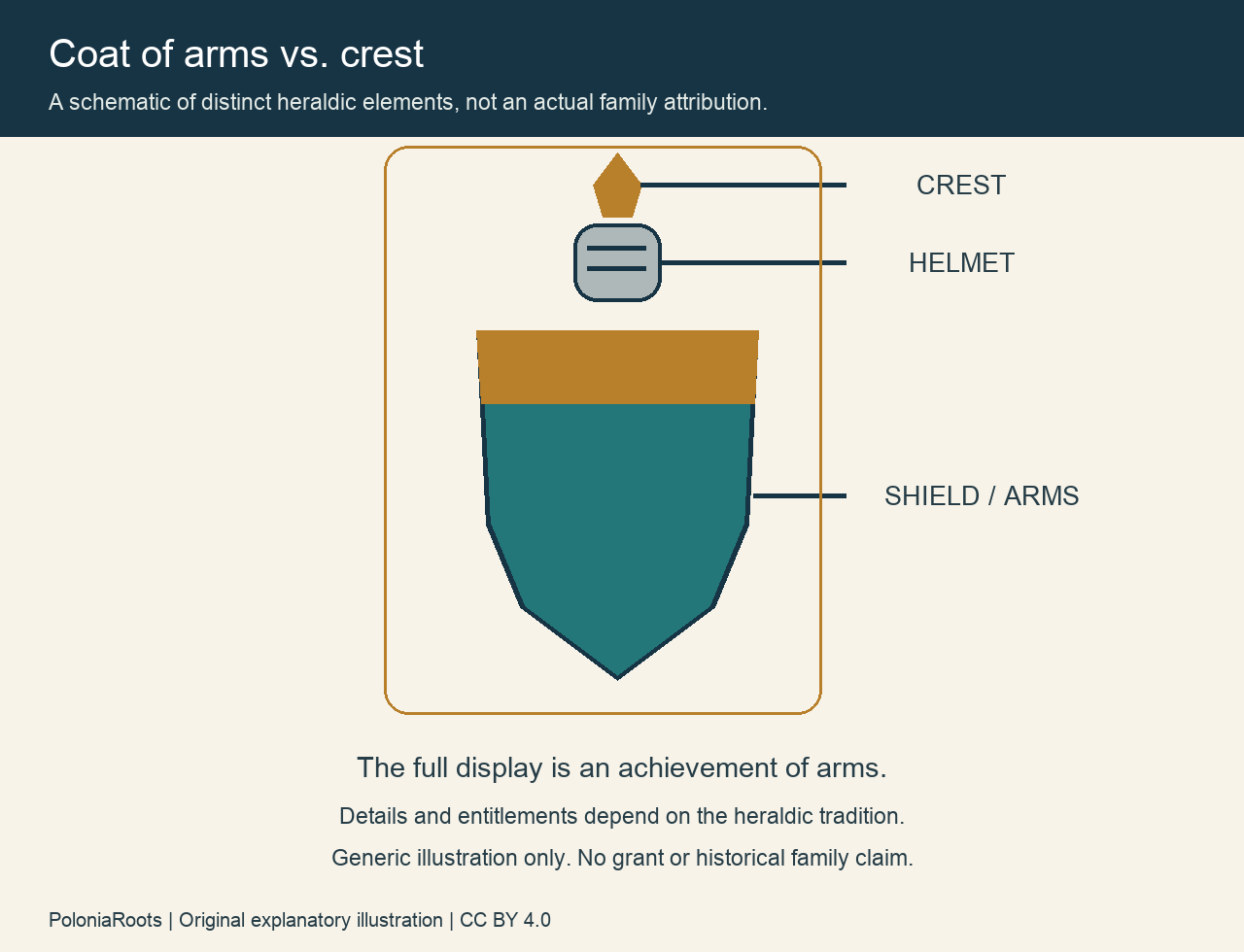
The difference between a coat of arms and a family crest is a difference between heraldic elements. In precise usage, the crest is the device above the helmet; it is not the whole display. A surname search that returns a colorful shield has not established that your family used it. For American families tracing Polish roots, the next step is a documented line of descent and an understanding of the relevant heraldic tradition.
Coat of arms vs family crest: the short answer
| Term | Meaning in this guide |
|---|---|
| Arms or coat of arms | The identifying heraldic design, principally displayed on a shield; everyday usage sometimes extends the term to a fuller display. |
| Crest | A distinct device placed above the helmet in a heraldic display. |
| Achievement of arms | The assembled display, potentially including shield, helmet, crest, mantling, and other authorized elements. |
| Family crest | A common informal phrase, frequently used commercially for an entire design; check what is actually being described. |
Terminology is the first check, not the final proof. A drawing can accurately show a crest and still be wrongly attributed to a particular family. Conversely, a family document may depict only a shield without showing every other heraldic element. Record what appears on the object before deciding whose arms it might be.
Why a surname does not establish a right to arms
The College of Arms explains that arms do not belong to everyone with a surname. Its guidance describes its own heraldic jurisdiction and should not be treated as a universal rule for every country. The general research lesson is useful: identify the historical bearer and demonstrate the relevant family connection. A surname-only sales result does neither.
Start with the claim as it was actually made. Did an ancestor leave a seal, a bookplate, a drawing, or a reference in a family letter? Or did a modern seller match a surname to an illustration? These are different starting points. Preserve the source, date, and provenance so that an attractive image does not become an inherited family fact by repetition.
Polish heraldry needs its own research context
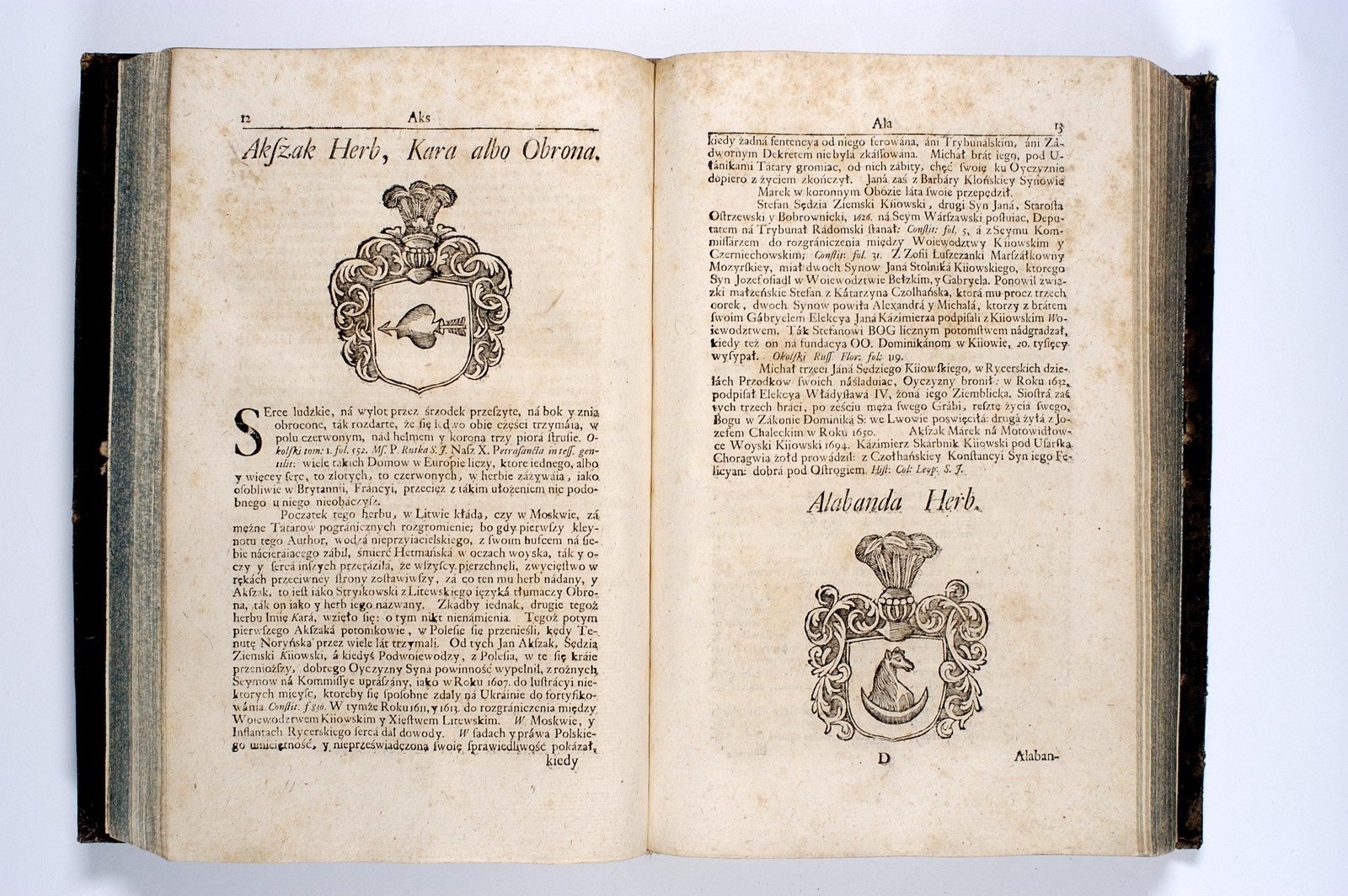
Polish heraldry developed a system of named heraldic clans, and one herb could be associated with multiple surnames. This differs from the assumption that every surname maps to one unique design. Our Polish coat of arms guide explains that system and the sources used to investigate a Polish claim.
The same surname can occur in unrelated families, and a noble line cannot be established from an ending such as -ski. Treat a published armorial entry as a reference to investigate. Ask which people, places, dates, and records the author names, then determine whether your documented line actually reaches that family.
How to investigate a family heraldry claim in six steps
- Write down the exact claim and where it originated.
- Document each generation backward from an identified ancestor.
- Identify the historical person or family to whom the arms are attributed.
- Read the full armorial entry or grant reference, including place and period.
- Compare the family connection with the rules and sources of that heraldic tradition.
- Write a conclusion that separates established descent, unresolved links, and unsupported stories.
Do not start with a preferred shield and work toward it. Begin with the family you can prove. A surname and an approximate region may produce several possible lines; each needs to be tested. A missing generation remains missing even when the desired arms appear in a book.
What evidence should the research file contain?
- Birth, marriage, and death sources supporting the relationships.
- Original spellings and locations for people with similar names.
- A full citation and image or transcription of the heraldic reference.
- The provenance of any family seal, bookplate, or other object.
- An explanation of discrepancies and the limits of the conclusion.
A working table can help: person, relationship being claimed, supporting record, conflicting evidence, and next source. Do not combine families simply because they shared a locality or used similar heraldic motifs. When an old compilation cites another source, follow that reference where possible instead of treating two dependent books as independent confirmation.
A fictional example: one surname, two different claims
This example is fictional. An American family purchases a framed crest bearing their surname. An older letter names a Polish town and mentions a family seal. The frame is evidence of a modern purchase. The letter is evidence that someone made a historical claim. Neither establishes the descent required to connect the living family to a specific historical bearer.
The researcher first reconstructs the American branch and identifies the immigrant’s parents. Only then can Polish registers be used to follow that line. If the line reaches a documented bearer named in an armorial, the next task is to evaluate the entry and supporting records. If it does not, the report should describe the unsupported claim without attaching the arms to the tree.
Questions to ask before buying a surname crest product
- Which named historical person used this design?
- What original source identifies the design and bearer?
- Does the seller provide research connecting my family to that bearer?
- Which country’s heraldic tradition is being applied?
- Is this a decorative product, a historical identification, or a claim of entitlement?
Decorative artwork can be enjoyed as artwork. The problem arises when its label is treated as genealogical proof. Keep the object’s modern purchase details in your research notes and avoid adding a noble title or heraldic attribution to family profiles without supporting evidence.
Frequently asked questions
Is a family crest the same thing as a coat of arms?
In precise terminology, no. The crest is a particular element above the helmet. Informal speech and retail products often use family crest for a larger display, so clarify the intended meaning.
Does every Polish family have a coat of arms?
No. A Polish surname does not automatically establish a connection to a historical heraldic clan. Research the family’s documented history rather than assigning arms from a name list.
Does genealogical research grant or certify arms?
Research can assess the documentary basis for a claim. It is not itself a heraldic grant or an official certification of entitlement. Procedures and authority depend on the relevant jurisdiction and tradition.
Sources and research tools
- College of Arms: heraldry terminology and surname misconceptions
- College of Arms: identifying arms or a crest
- College of Arms: registering a pedigree
- Polona: Niesiecki armorial, 1728
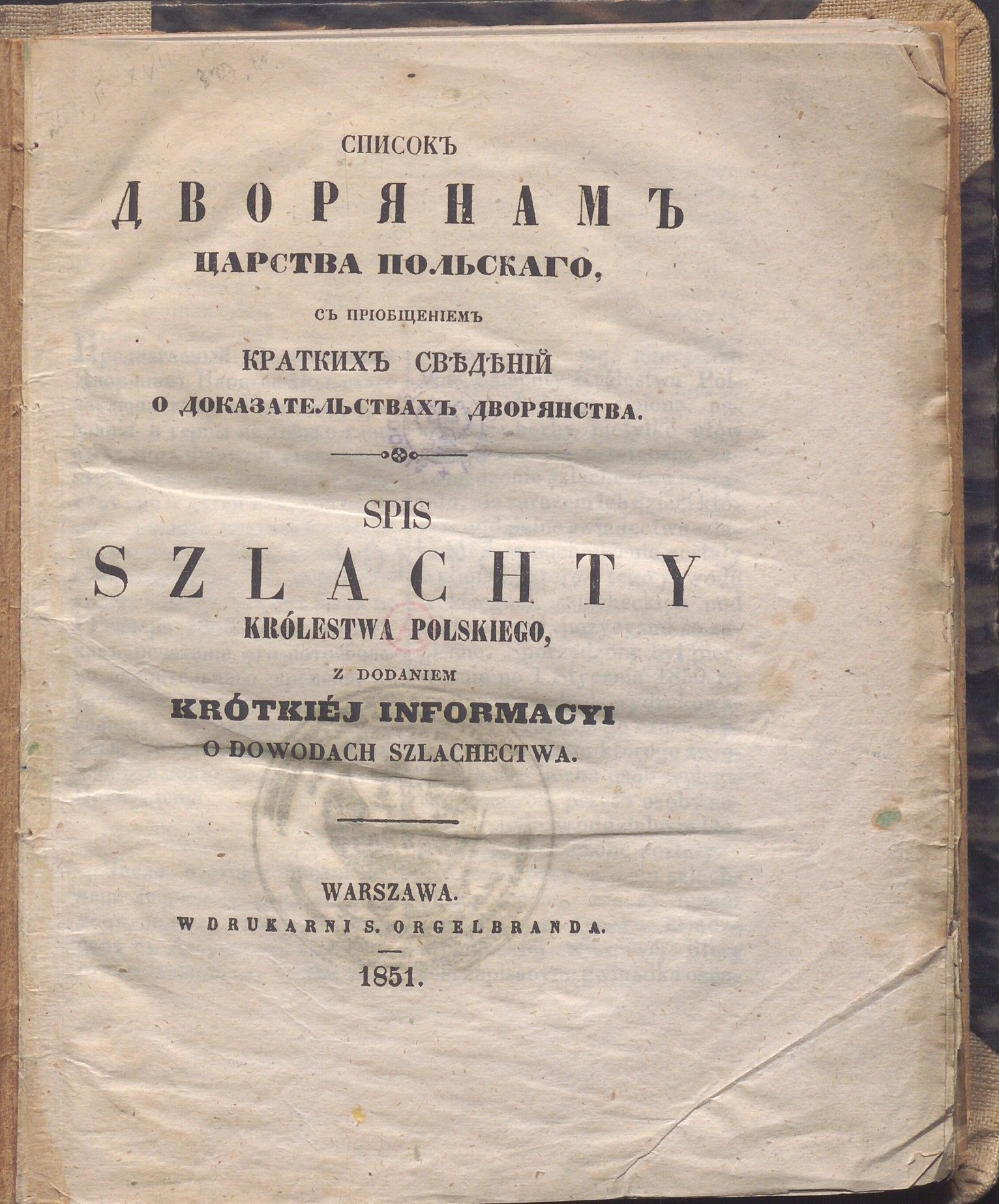
- Polona: List of the Nobility of the Kingdom of Poland, 1851
How we can help
PoloniaRoots researches American and Polish documents to test family connections and identify the right ancestral locality. Review our research projects and prices, select a scope, and pay before sending family details through the order form. Include the documents, source references, and unsuccessful searches you already have. A surname or online hint alone cannot guarantee a particular discovery.