Double Cousins: Family Trees and DNA Matches Explained
Family History Research · Double Cousins
Double cousins are related through two family paths. In the familiar double first cousin pattern, two siblings from one family have children with two siblings from another family. Their children share both sets of grandparents. Recognizing both paths can explain a DNA match that looks closer than an ordinary first cousin, but a large shared-DNA total does not prove the relationship on its own.
What are double first cousins?
Imagine that brothers Adam and Ben marry sisters Clara and Dora. Adam and Clara have a child, and Ben and Dora have a child. Those children are first cousins through their fathers and first cousins through their mothers. They have four grandparents in common, assuming the grandparents are four different people. The two couples do not have to be biologically related to one another for their children to be double first cousins.
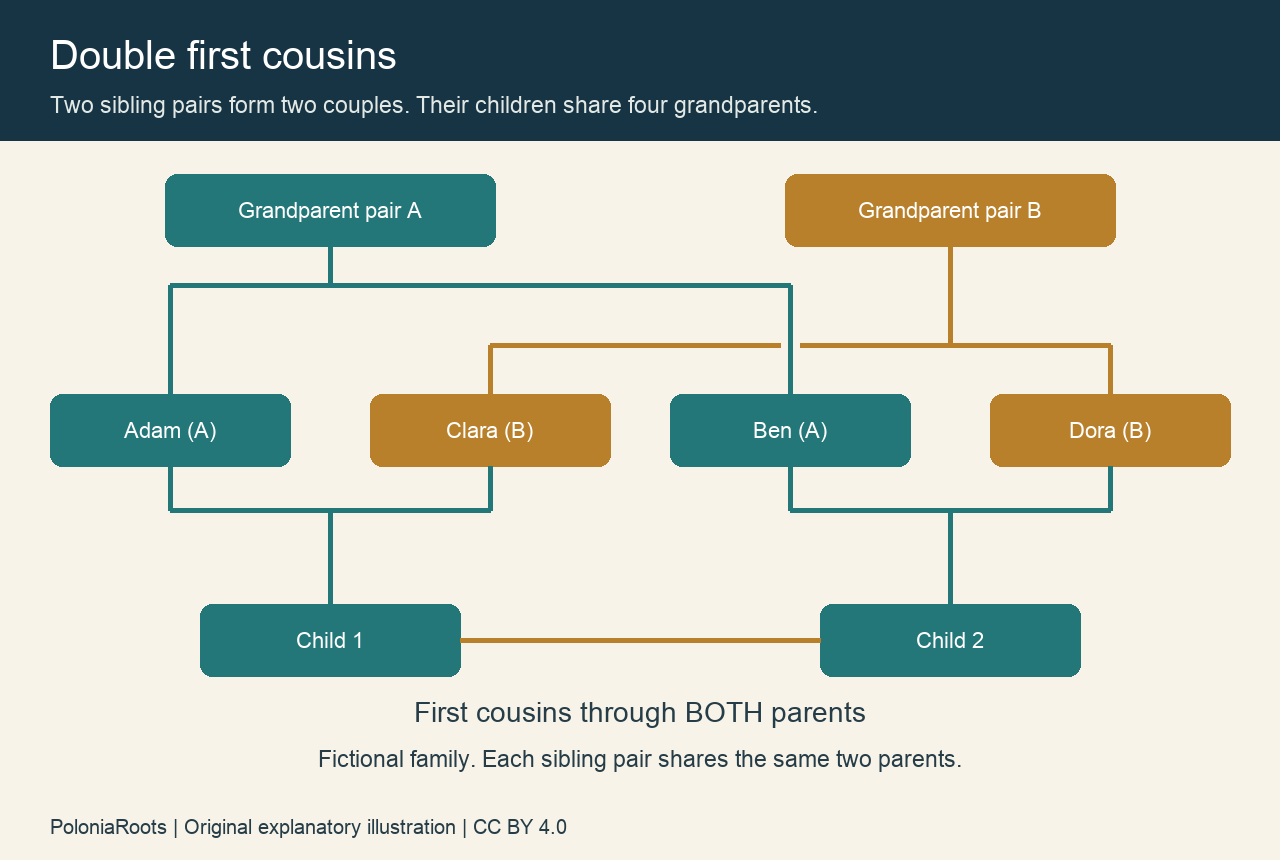
The broader term double cousins can also describe two other cousin paths. State both relationships precisely in a research note. Double first cousins and two people who are first cousins on one line and third cousins on another do not have the same expected DNA sharing.
How much DNA do double first cousins share?
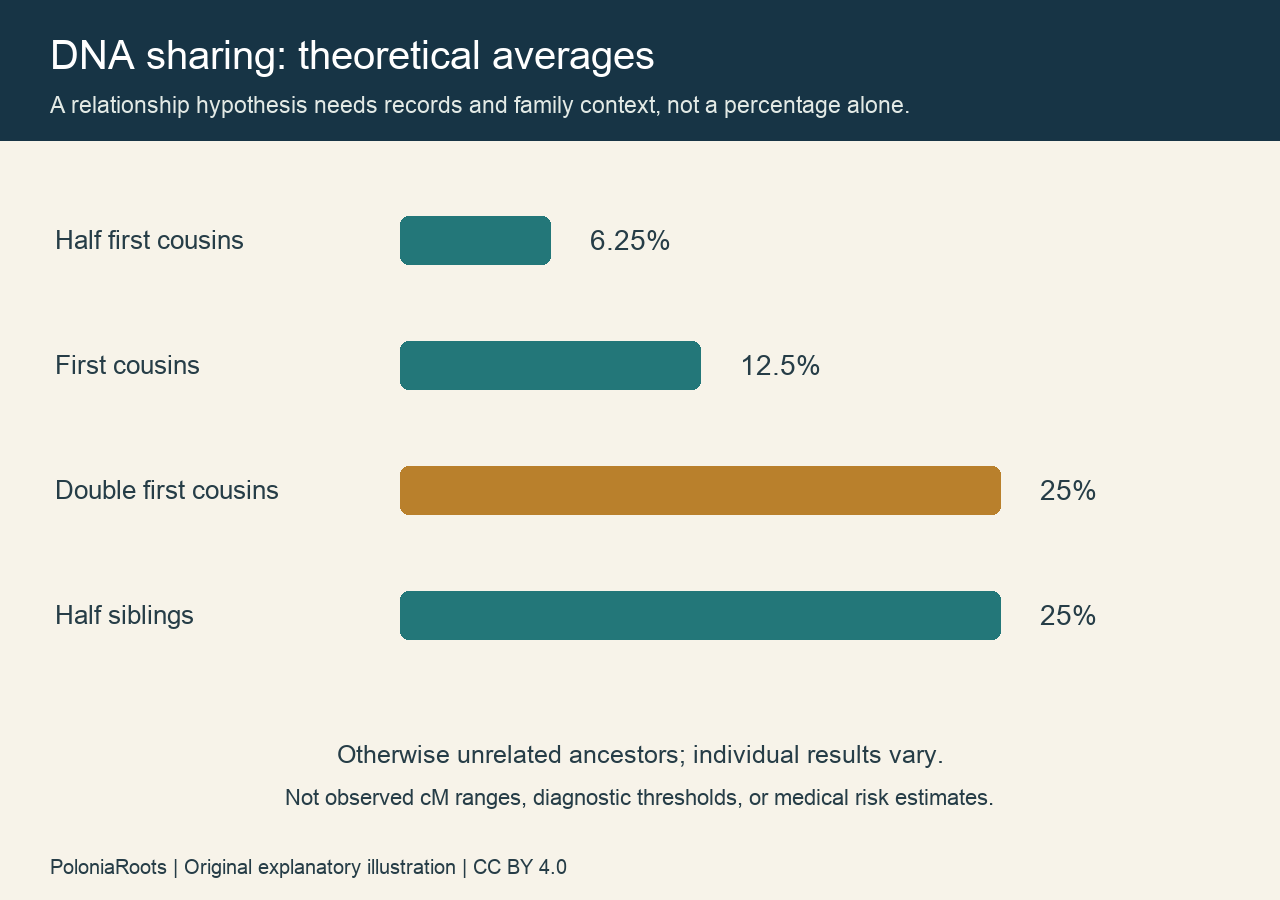
In a simplified pedigree with otherwise unrelated ancestors, the expected autosomal sharing for ordinary first cousins is about 12.5%, and for double first cousins about 25%. These are theoretical averages, not individual test results or fixed thresholds. Recombination creates variation, and website reporting methods can complicate direct comparisons of percentages or centimorgan totals.
A double first cousin relationship can overlap the amount of sharing associated with other close relationships. Consider age, generations, known parents, and matches on both family sides. Do not announce an unexpected parent-child or sibling relationship simply because a testing company places the match in a broad close-family category.
Double first cousins are not half siblings
| Relationship | Family-tree connection | Why the distinction matters |
|---|---|---|
| Ordinary first cousins | Their parents are full siblings on one side | One grandparent pair is shared. |
| Double first cousins | Their parents are two sibling pairs | Both grandparent pairs are shared through two paths. |
| Half siblings | They share one parent | The relationship is through a shared parent, not two cousin paths. |
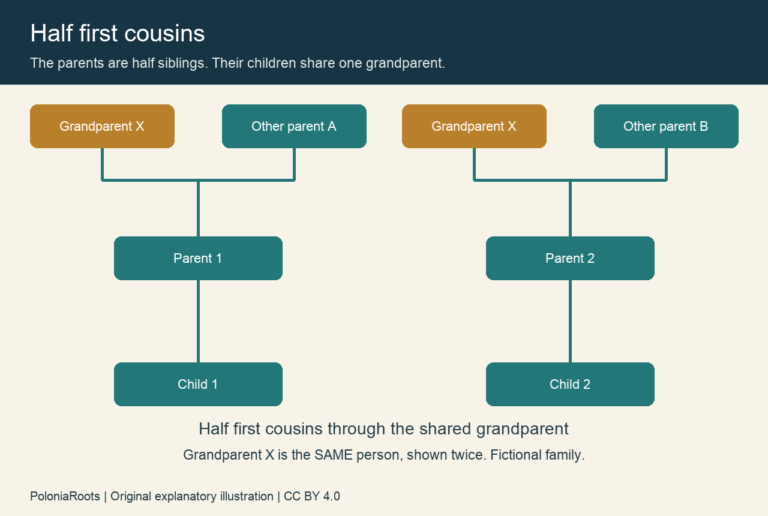
| Half first cousins | Their parents are half siblings | They share one grandparent through this path. |
Two relationships can have a similar theoretical average and still be different relationships. The family tree tells you the paths; DNA helps test whether the evidence fits those paths. A platform label is a hypothesis category. Save the original cM total and any segment information the platform provides rather than retaining only the predicted relationship label.
How to test a double cousin hypothesis
- Write down both proposed paths, including the parents and grandparents.
- Document each parent-child connection with appropriate records.
- Check that the two proposed sibling pairs really are siblings.
- Compare the testers’ ages, locations, and known family histories.
- Identify known relatives who can help separate or confirm the two branches.
- Assess the shared-DNA evidence alongside alternative relationships and explain any uncertainty.
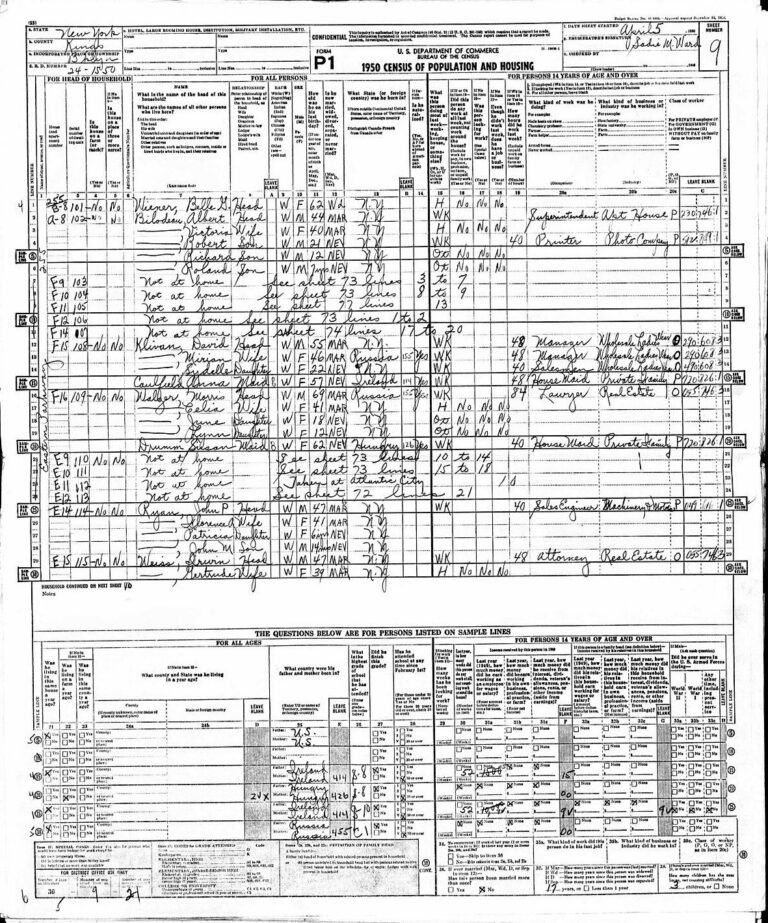
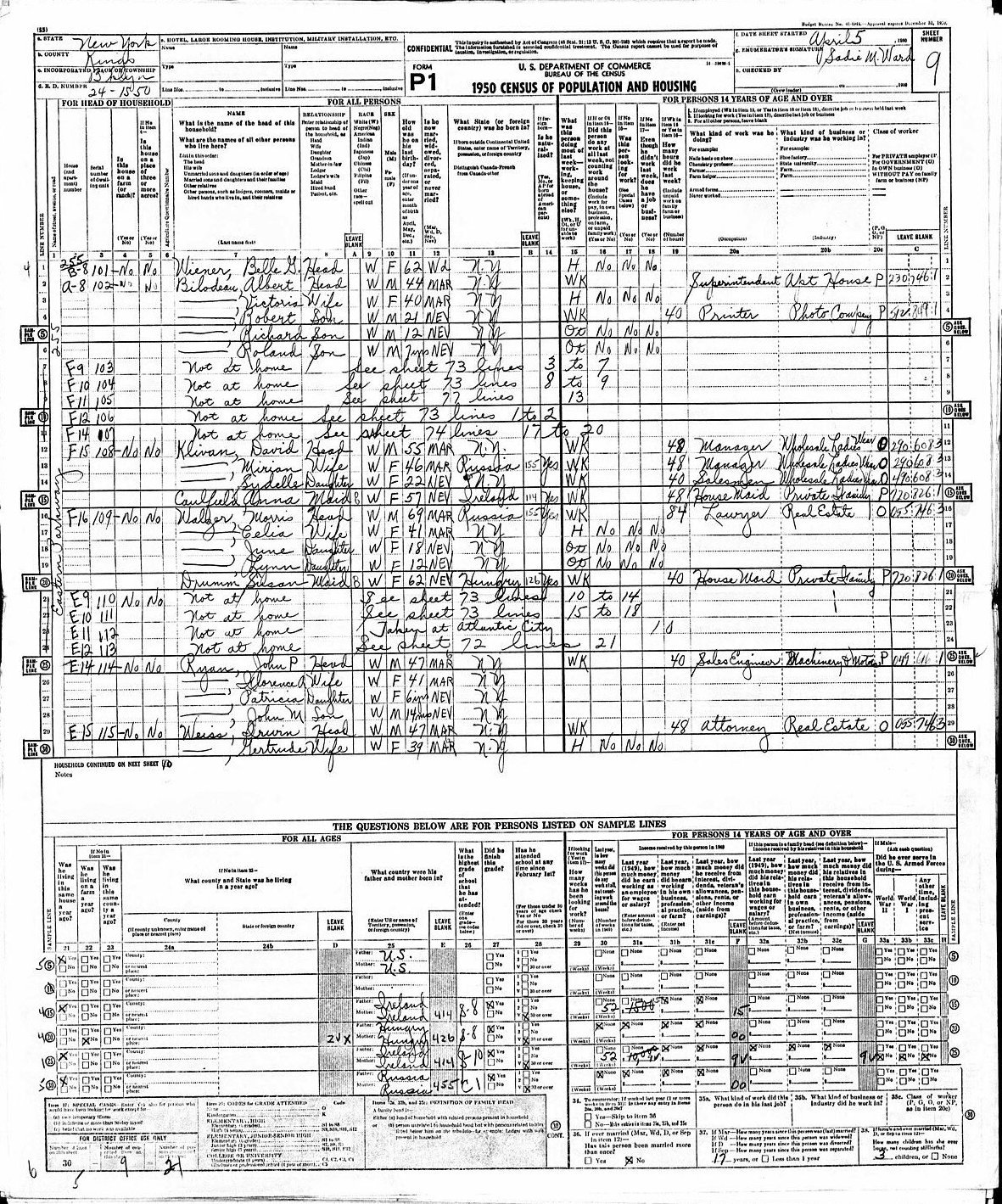
A household census is a useful starting source but may not settle every biological relationship. Combine it with birth, marriage, church, probate, and other relevant evidence. Check the original headings and relationship fields. A surname change or remarriage can conceal the sibling connection that makes the two paths visible.
Shared matches: useful clues, not automatic triangulation
A match connected through two branches can appear among relatives from both sides of the tree. Before treating this as an error, ask whether both paths are already documented. A shared-match list does not by itself show that everyone shares the same segment from the same common ancestor. Use the tools your platform actually supplies and record the limits of what you can observe.
When chromosome comparisons are available, they can add evidence about shared segments. They do not remove the need to identify the ancestors in the records. If the test is on a platform without the required segment information, describe the analytical limitation instead of inventing segment details from a list of shared matches.
A fictional Polish American example
This example is fictional. Alice and Robert believe they are first cousins through their fathers. Their DNA result suggests a closer connection than they expected. Research in American marriage records reveals that their mothers were also sisters, using different married surnames. The documented family structure now supplies two first cousin paths to test against the DNA evidence.
The next step is to confirm the two sibling relationships and identify relevant relatives on both lines. A Polish village shared by several matches is a locality clue, not sufficient proof of the exact connection. The conclusion should explain both paths, the sources supporting them, and whether other close relationships remain possible.
What not to infer from a double cousin relationship
- Do not assume that the parents in each couple were related merely because their children are double cousins.
- Do not treat an average DNA percentage as a fixed prediction for every pair.
- Do not label all high-sharing matches as double cousins.
- Do not turn genealogical sharing into a medical risk calculation.
- Do not assume one verified path establishes the second path.
Double cousin relationships can make an analysis more complex, but they also supply additional relatives and records to investigate. A useful report shows the paths clearly and explains which evidence supports each one. It should be possible for another researcher to follow the conclusion without trusting the match label alone.
Frequently asked questions
Can double first cousins share as much DNA as half siblings?
Their theoretical average sharing is similar, so the amount alone may not distinguish the relationships. The actual family structure, relatives, ages, and available DNA evidence are needed to evaluate the alternatives.
Are double cousins the same as pedigree collapse?
No. A double cousin relationship describes two paths connecting two people. Pedigree collapse describes repeated ancestors within one person’s pedigree. A particular family can involve both, but one term should not replace the other.
Can a DNA match label confirm both cousin paths?
No. Document the proposed paths and compare them with the available DNA evidence. A label cannot supply the missing parents, grandparents, or source citations.
Sources and research tools
- MyHeritage: double first cousin family structure
- DNA Painter: Shared cM Project relationship comparison tool
- Ancestry: discovering relationships to DNA matches
- MyHeritage: chromosome comparison and triangulation
How we can help
PoloniaRoots offers DNA Match Analysis for $2,750: one existing autosomal test on AncestryDNA or MyHeritage, one platform, and one defined family-history question. The work combines available matches, family trees, and documentary evidence in a written report. It does not include a new laboratory test, clinical interpretation, or a guaranteed identification. Review the scope and pay before submitting your research details. Use approved sharing permissions; do not send account passwords or raw DNA through a public form.