US Records · Michigan Birth Records
Michigan birth records require attention to the record format as well as the year. Early entries were kept in ledgers, while later registration used individual certificates. For Detroit and Hamtramck families, the historical municipality and county help determine where to search.
Early Michigan birth registers and later certificates
The Library of Michigan dates the state’s annual birth and death assessments to April 5, 1867. Its guide explains that births continued to be recorded in ledger form through 1905. An early birth may therefore appear as one line on a page of entries, rather than on a separate certificate with a modern design.
The FamilySearch collection Michigan Births, 1867-1902 includes an index and images of early registrations. Check the collection description and current image-access conditions. A ledger transcription should retain the printed column headings, entry number and any date showing when the report was received. Photograph or download the whole page when the repository permits it.
Use a historical map to identify the jurisdiction

A family’s later address does not necessarily identify the municipality in which a child was born. Compare the place reported in the birth entry with a map appropriate to the event year. Keep Detroit, Hamtramck and Wayne County as separate levels in your research notes. A hospital birth can also require a different local search from the parents’ residence.
Where to search Michigan birth records
State records and the Library of Michigan
Use the Library of Michigan vital-records guide to identify indexes, microfilm and available collections. For a copy held by the state, use the Michigan Department of Health and Human Services ordering page. The department states that registered birth records more than 100 years old are unrestricted; newer records require an eligible requester. Verify the instructions for the particular record before applying.
County and township evidence
Contact the relevant county clerk about surviving local registers and indexes. Give the municipality, date range and known parents. Ask whether the local series includes the event period, whether the record is a ledger entry or certificate, and how a full copy can be obtained. A collection title alone does not establish complete registration of every birth.
Read the columns before following a name match
| Detail | Research use |
|---|---|
| Child’s name and event date | Test against a baptism, census and later marriage |
| Parents’ names and maiden surname | Distinguish couples with the same surname |
| Reported birthplace and residence | Separate event jurisdiction from household location |
| Reporting or recording date | Distinguish the event from the administrative entry |
If the child is unnamed, search by parents and inspect nearby entries. An English given name in a later census may differ from the baptismal form. Do not reject an entry because a single spelling differs, but require several matching details before accepting it.
Other documents for Polish Detroit and Hamtramck families
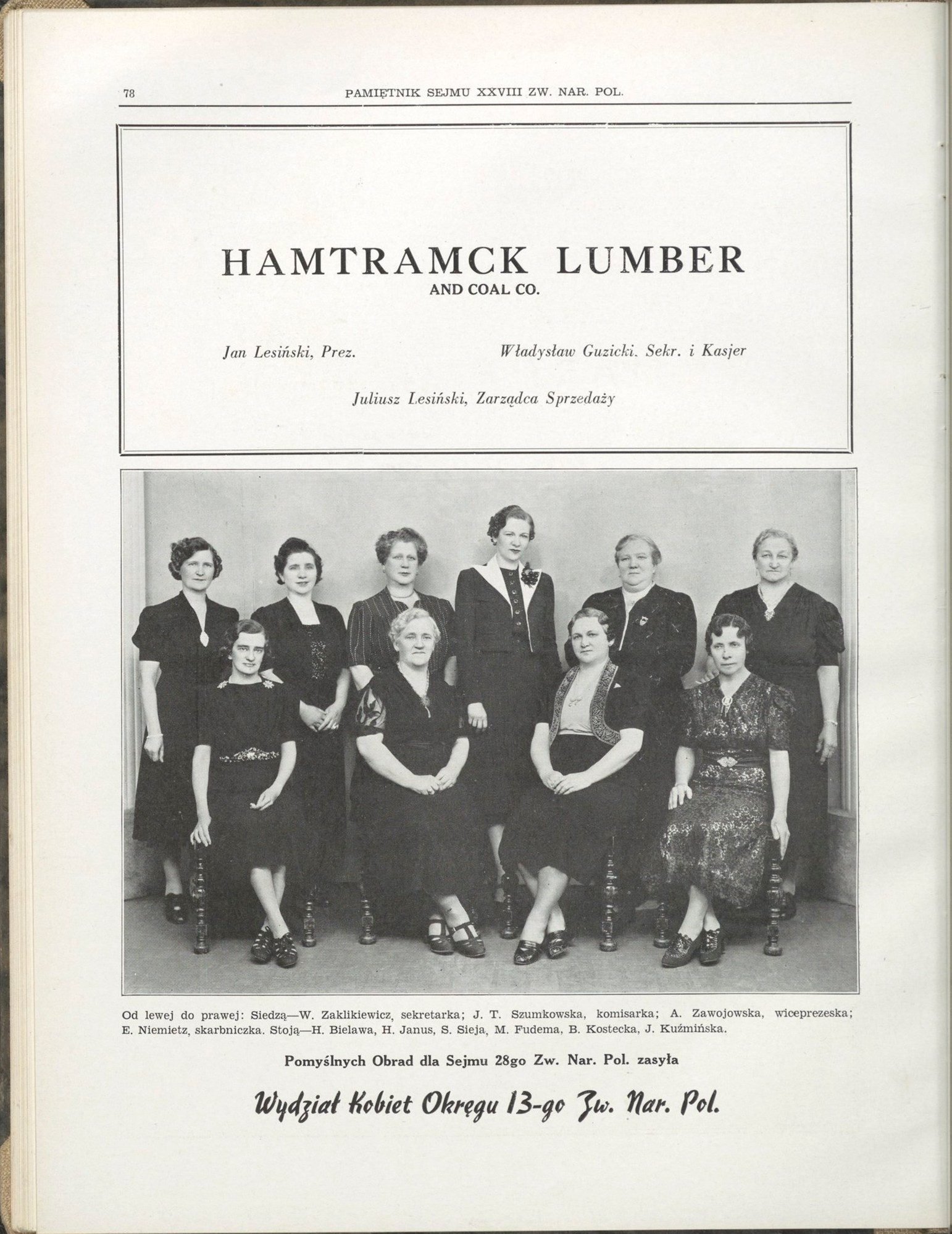
Directories, parish histories and society publications can help establish an address or identify a church. They are supporting sources. A business advertisement does not prove that a relative worked there, and a group portrait does not identify an unnamed ancestor. Use names and addresses as leads, then return to the relevant vital or church record.
When no birth entry appears
- Verify that the searched collection covers the year and locality.
- Try unnamed children and the parents’ surname variants.
- Check the county index as well as the state or online index.
- Search the likely parish baptism register.
- Ask about delayed birth registrations and their separate indexes.
- Log the unsuccessful searches so another index is not mistaken for a new source.
Sources and research tools
- Library of Michigan: vital-records guide
- Michigan vital records: current ordering and access
- FamilySearch: Michigan Births, 1867-1902
How we can help
We compare American documents with parish and civil records in Poland to identify the ancestral locality and establish family connections. See the research projects for scope and prices.