US Records · WWI enemy alien records
During World War I the United States classified residents by legal nationality, not by the ethnic identity a family used at home. A noncitizen born in the German partition of Poland was legally a German subject and could be registered as an enemy alien even while describing himself as Polish.
Why a Polish ancestor could be classified as an enemy alien
Until 1918 the Polish lands were divided among three empires. A Polish immigrant born in the German partition who had not become a United States citizen remained a German subject. The United States also declared war on Austria-Hungary in December 1917, so for an ancestor from the Austrian partition check how the rules applied in the individual case rather than assume either way. Classification depended on wartime law and citizenship, not simply language or birthplace.
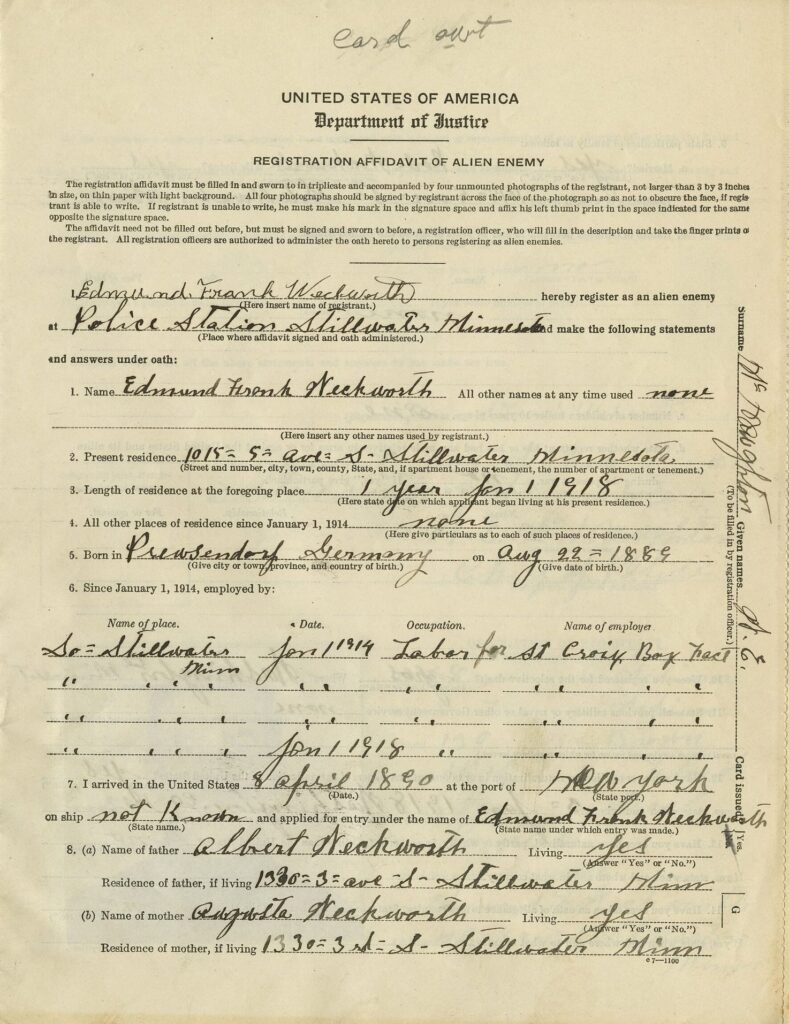
What registration required
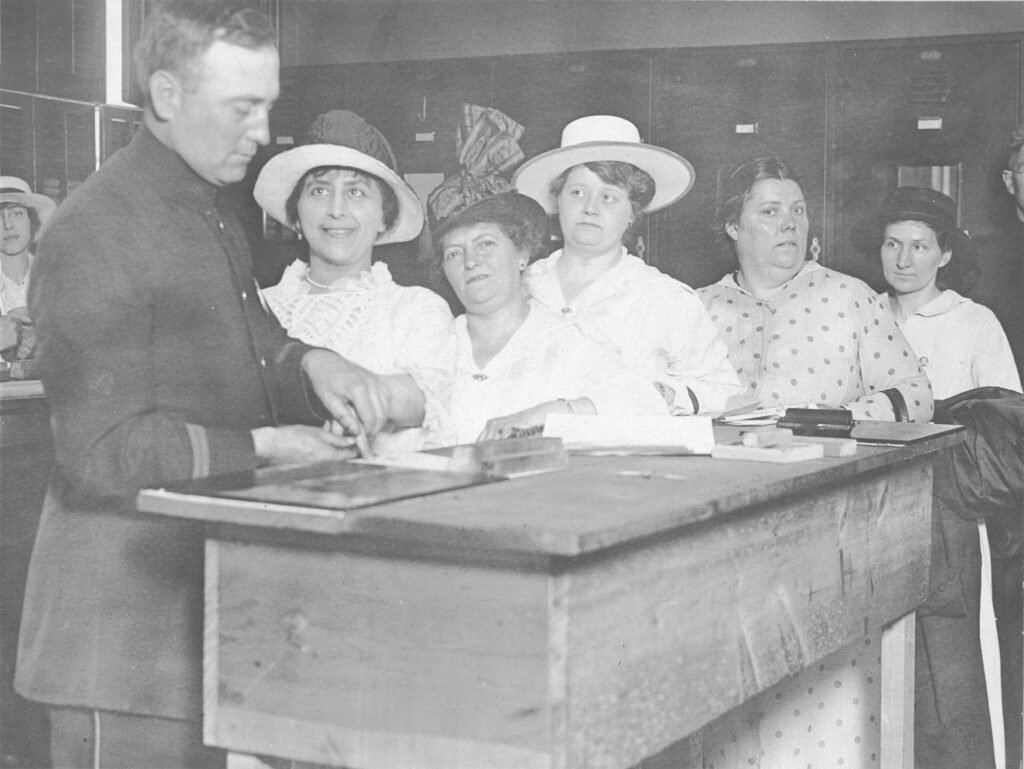
Regulation 19, issued in November 1917, introduced enemy alien registration, and NARA reports that more than 480,000 German enemy aliens registered. The four-page form could include family and immigration details, physical description, photograph and fingerprints. Women were brought into registration later in the war, and American-born women who had married German men were also classed as alien enemies.
The survival problem
There is no surviving national master set. NARA states that very few registration and permit records remain, and surviving groups are incomplete. Some records are federal, while others have been identified in state archives, historical societies and county libraries.
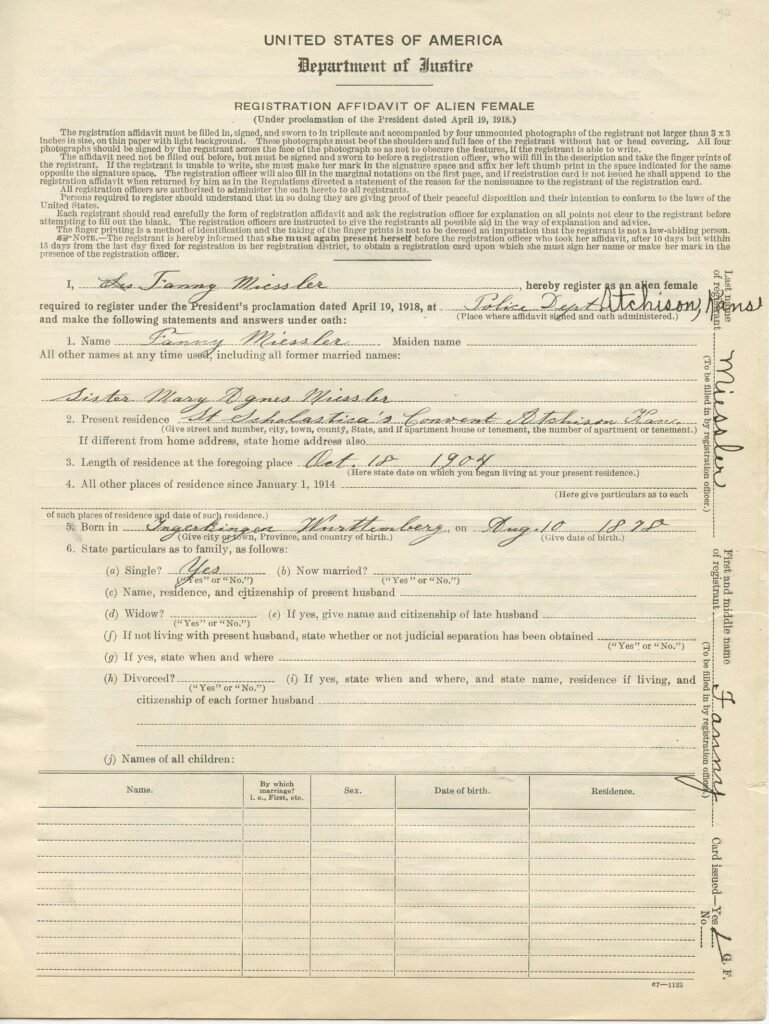
Where records are known
NARA identifies surviving registration material for selected federal districts and a limited number of states. Its guide lists fully digitized, name-searchable series for Kansas, Minnesota and Nebraska, and surviving but undigitized material for other states, including New York, Wisconsin and Texas. Always check the current list rather than assuming national coverage.
A careful search strategy
- Establish the ancestor’s citizenship status during 1917 and 1918
- Identify the partition and legal nationality recorded in American documents
- Check NARA’s location guide for the state and federal district
- Search the relevant state archive and local historical repositories
- Compare any registration with naturalization, draft and newspaper evidence
Enemy alien was a legal wartime category. Do not use it as a description of loyalty, conduct or ethnic identity without evidence from the individual case.
Sources and research tools
How we can help
We distinguish legal nationality from Polish identity, identify the responsible federal district and search the scattered surviving record groups.