US Records · Certificates of arrival
A certificate of arrival is an immigration-service verification of an admission record, often preserved with naturalization papers. It can identify a port, date and ship or railway. It is not a birth certificate, a passenger manifest or the final certificate of citizenship.
Read Maria von Trapp’s actual certificate
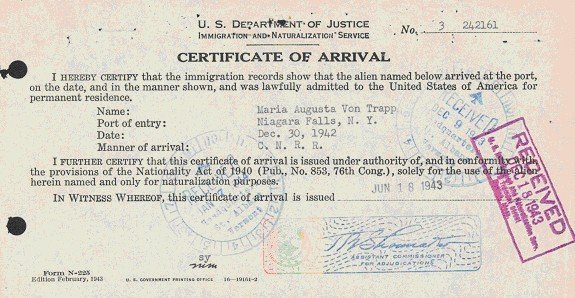
The certificate says the immigration records show admission for permanent residence at Niagara Falls, New York, on December 30, 1942. The means of arrival is C.N.R., a railway reference rather than an ocean ship. The issuing date is June 18, 1943. A received stamp dated June 24, 1943, adds a third administrative date.
None of those dates should be substituted for the other. The admission date helps locate the underlying arrival record. The issuing and received dates show later processing of the verification. The number links this document to other papers but does not itself establish the date citizenship was granted.
The fields and their uses
| Field | Genealogical use |
|---|---|
| Name | Compare the arrival identity with the naturalization petitioner |
| Port of entry | Choose the correct passenger or border collection |
| Date of admission | Search the underlying record for the qualifying entry |
| Manner of arrival | Distinguish a ship from rail or another conveyance |
| Certificate number | Match the attachment to references in the petition |
| Issue and received dates | Reconstruct the later verification process |
Where to look for the certificate
Retrieve the complete naturalization petition packet, not just its indexed front page. Ask the court or archive whether attachments, the declaration and oath pages survive with the petition. The certificate may be absent, separately filed or visible only in a multi-image digital record. A database entry naming a petition does not guarantee that every attachment has been digitized.
- Identify the naturalization court and petition reference.
- Retrieve the petition and all surviving attachments.
- Match any certificate number mentioned in the petition to the certificate.
- Record the admission port, date, name and conveyance.
- Use those details to locate the original manifest or border admission.
- Compare the qualifying entry with any earlier or later journeys.
It may certify a later permanent entry
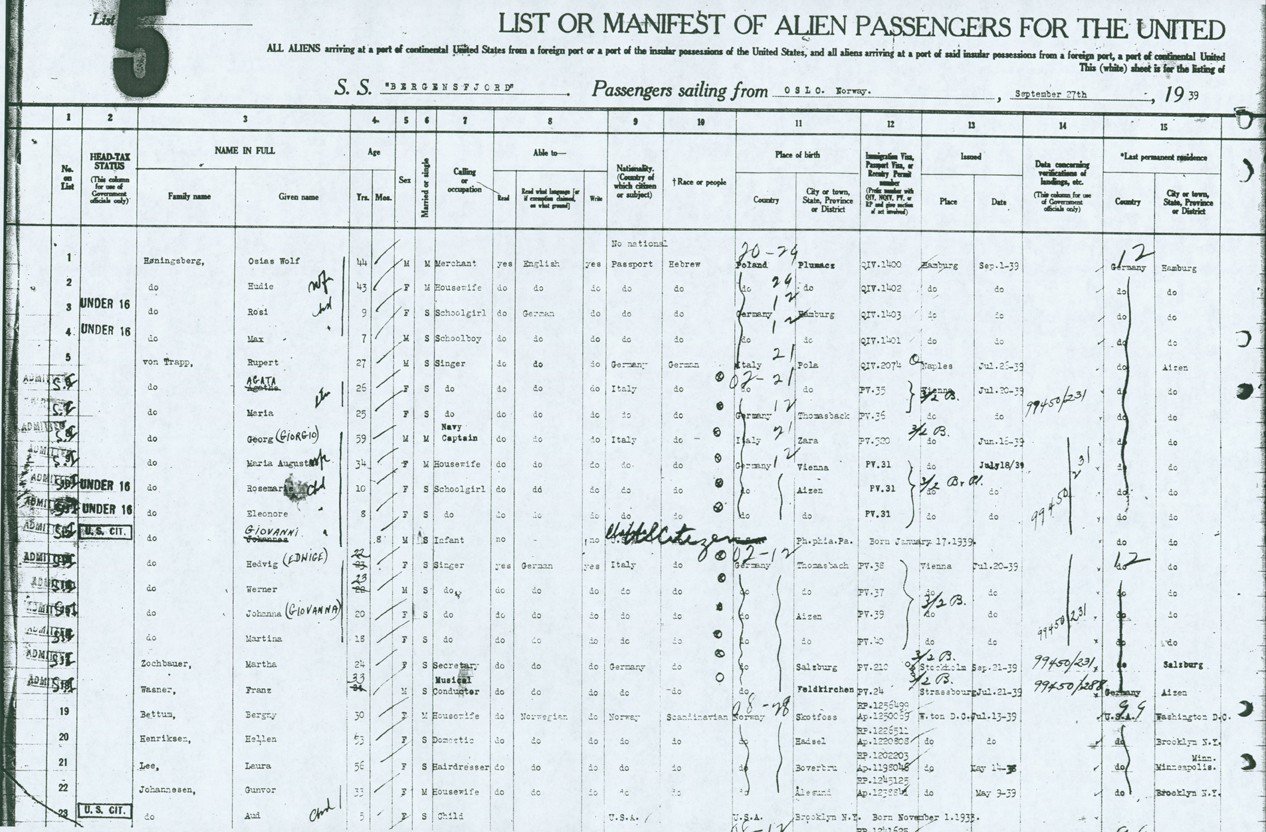
An immigrant could visit the United States, leave and later return for permanent residence. The certified entry can therefore differ from the first arrival remembered in family history. Maria’s example is especially useful because the record concerns a railway entry rather than the transatlantic journey usually associated with her family.
For a Polish ancestor, a certificate may explain why an Ellis Island search for the census immigration year fails. Search the named border or port and compare the whole travel chronology. Do not presume that a different date is an error before checking the person’s several admissions.
What the certificate cannot prove
The short form does not supply a complete family history or necessarily a detailed birthplace. It verifies an immigration event for its administrative purpose. Parents, spouse and children may appear in the petition or original manifest rather than on this certificate. Citizenship must be evaluated from the final court action and relevant citizenship records.
Cite the verification and underlying event separately
A useful citation identifies the certificate number, person, issuing agency, issue date and the naturalization file or archive holding it. In the timeline, describe the admission as the event being verified. When you obtain the underlying border record, cite that separately instead of treating two documents about one entry as two independent journeys.
Sources and research tools
- NARA example and its naturalization file
- NARA naturalization records guidance
- NARA Canadian border records
How we can help
We compare immigration documents with American family records and records in Poland, tracing identities, relatives and places across the journey. See our services for project scope and prices.