US Records · Manifest annotations
A crossed-out name on a passenger list does not automatically mean the person failed to sail or was deported. Annotations can redirect an entry, correct a classification or document a later record check. Read the mark in context and follow its reference.
A real transfer between passenger lists
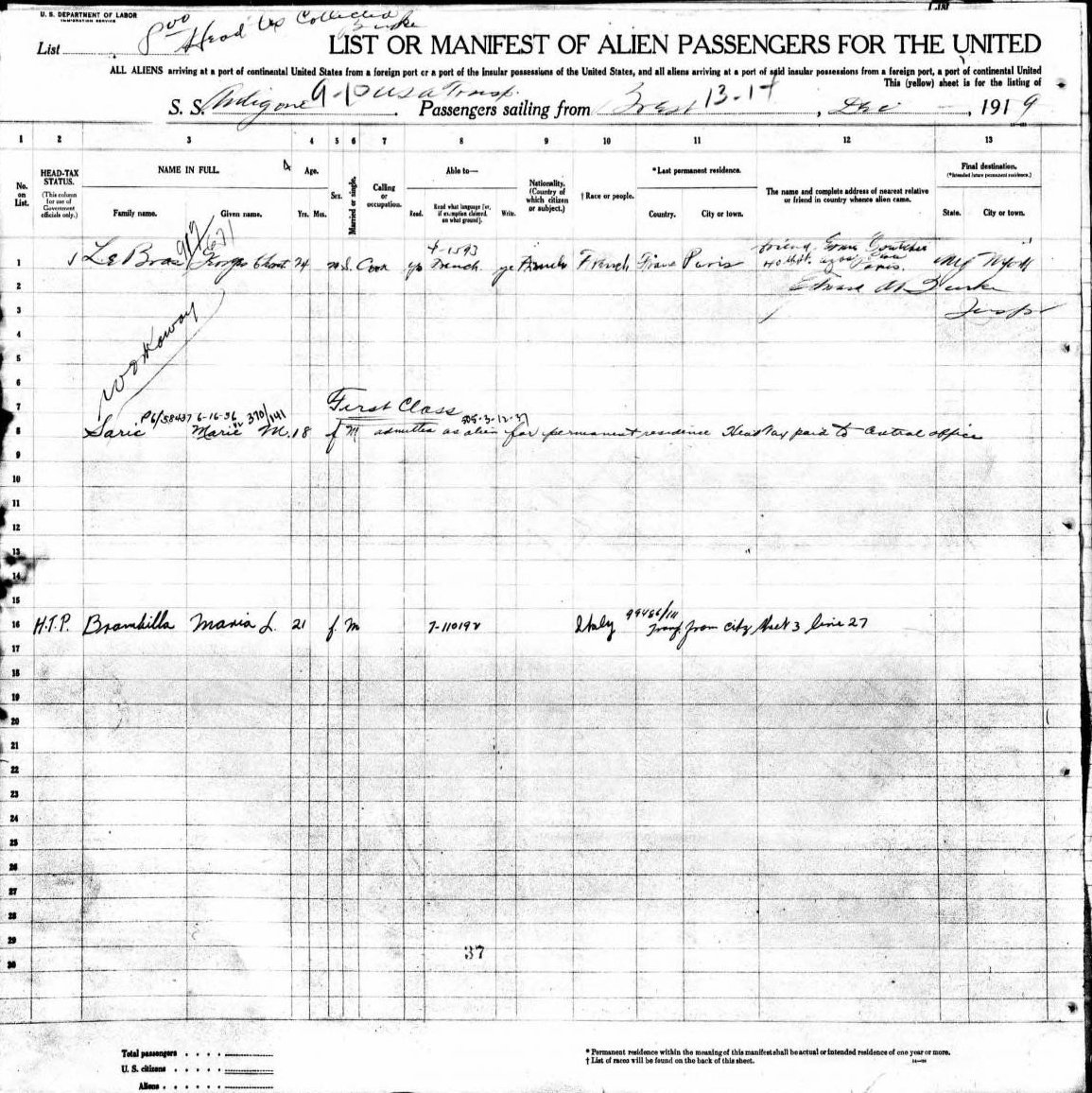
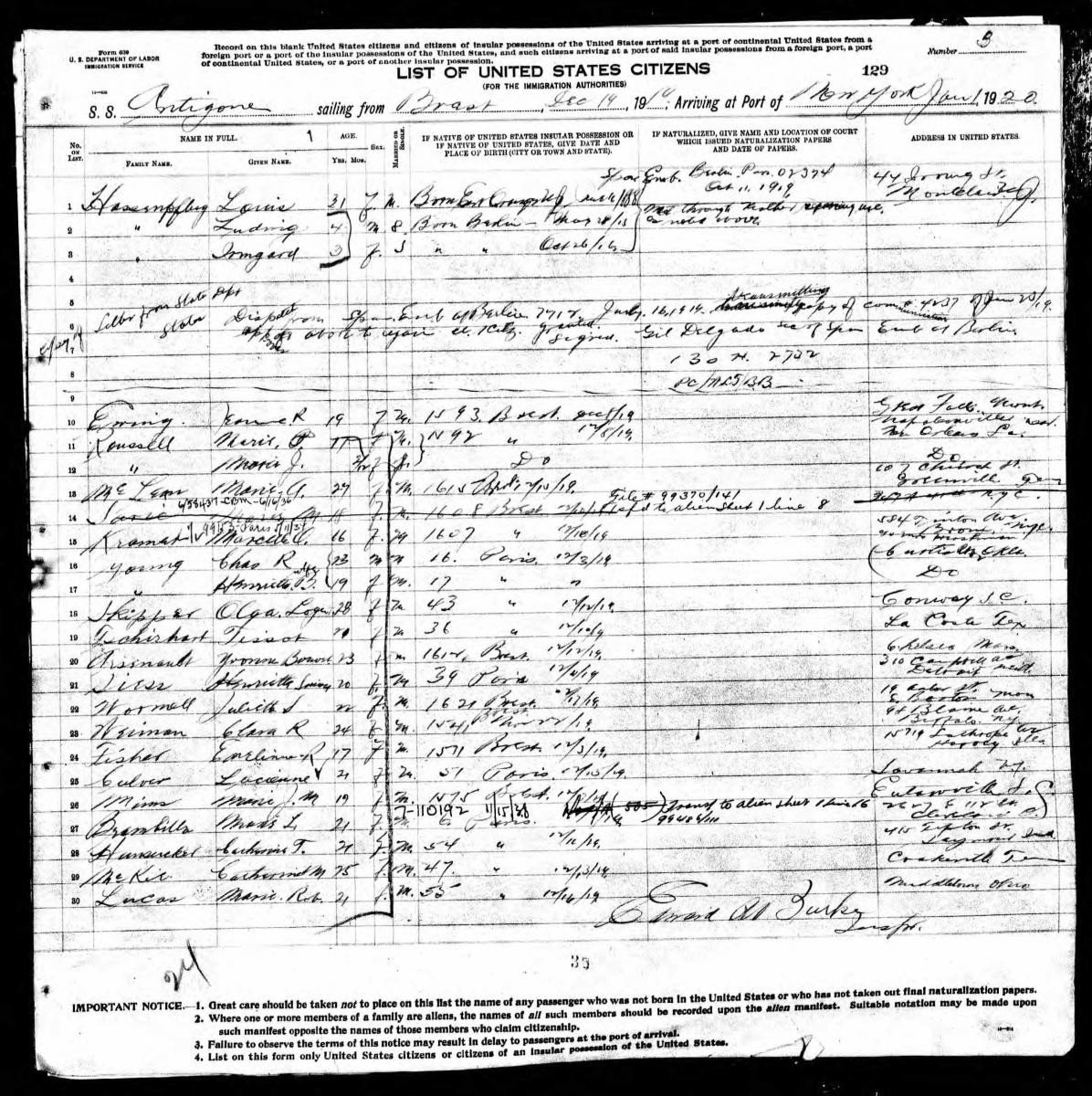
NARA’s example follows Marie M. Saric from a crossed-out entry on the United States citizen list to line 8 of an alien-passenger sheet. The displayed sheet includes a reference to that transfer. Reading only the crossed-out citizen entry could produce a wrong conclusion about whether she traveled.
The annotations also include later numbers and dates. The ship’s departure information belongs to the voyage, while subsequent verification marks belong to later administrative actions. A number written across an entry is not necessarily an age, ticket number or original arrival-date field.
What to check before interpreting a mark
| Mark or feature | First research step |
|---|---|
| Crossed-out name | Look for a transfer or correction reference and another list |
| Sheet and line notation | Open the specified page and compare identity details |
| Later date or number | Separate it from the original voyage and consult an annotation guide |
| Detention or inquiry reference | Look for the related inquiry list or case material |
| An unclear abbreviation | Retain the literal reading until the form and context resolve it |
Use NARA’s annotation guide and the whole manifest. Do not assign a single universal meaning to every strikeout, stamp or number. Forms, administrative procedures and the purpose of a later check varied over time.
Read the record in layers
- Transcribe the original passenger row and its printed headings.
- Describe the position, color and wording of each added mark where visible.
- Record referenced sheet and line numbers without changing the original transcription.
- Retrieve the linked list, second page or inquiry document.
- Compare names, age and route to ensure the reference concerns the same traveler.
- Create separate timeline entries for the voyage and later verification.
A plain text index usually collapses these layers. The original scan can show that a surname was corrected, that the line moved to another classification, or that an administrative reference was written years later. Keep both the searchable transcription and the image-based evidence.
How this helps with Polish immigrant names
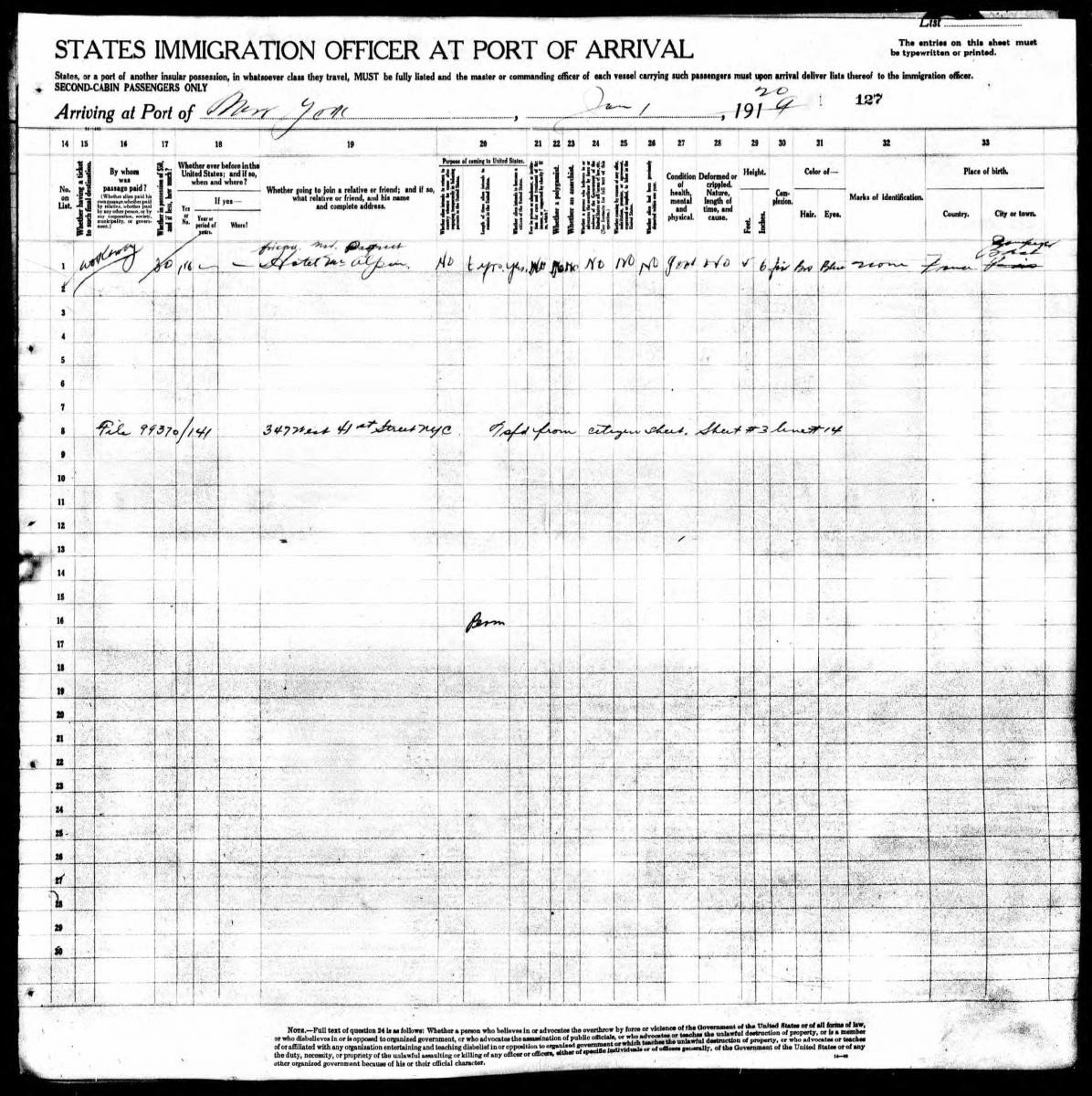
A variant found in an annotation can help connect the manifest to a later naturalization name. Preserve the original name and the added wording separately; neither proves that a port official invented a new surname. Use signatures, parents, birthplaces and addresses to establish the identity across documents.
A relative’s address can anchor the arrival in an American neighborhood. Compare that contact with directories and census households. If the annotation leads to another page, read the other passengers as well: siblings or acquaintances can make an otherwise ambiguous surname identifiable.
Annotations can lead to another record series
A later arrival-verification reference may make a naturalization file worth searching. An inquiry reference can point toward immigration case material. Record the number exactly and consult the relevant archive’s finding aid before ordering; a number alone does not establish that a separate case survives.
If a referenced record cannot be found, explain the gap in your research notes. Do not convert an illegible stamp into a claim of exclusion, disease or deportation. The sound conclusion may be that the passenger’s row was administratively revised and the reason remains unresolved.
Sources and research tools
- NARA manifest annotation guide and linked pages
- NARA passenger arrival research
- NARA naturalization research
How we can help
We compare immigration documents with American family records and records in Poland, tracing identities, relatives and places across the journey. See our services for project scope and prices.