US Records · Pennsylvania birth records
Pennsylvania began statewide birth registration in 1906. Earlier births require county and local research. The State Archives’ historical indexes can locate a certificate, but the index is only the first step toward the full record.
What the historical birth index looks like
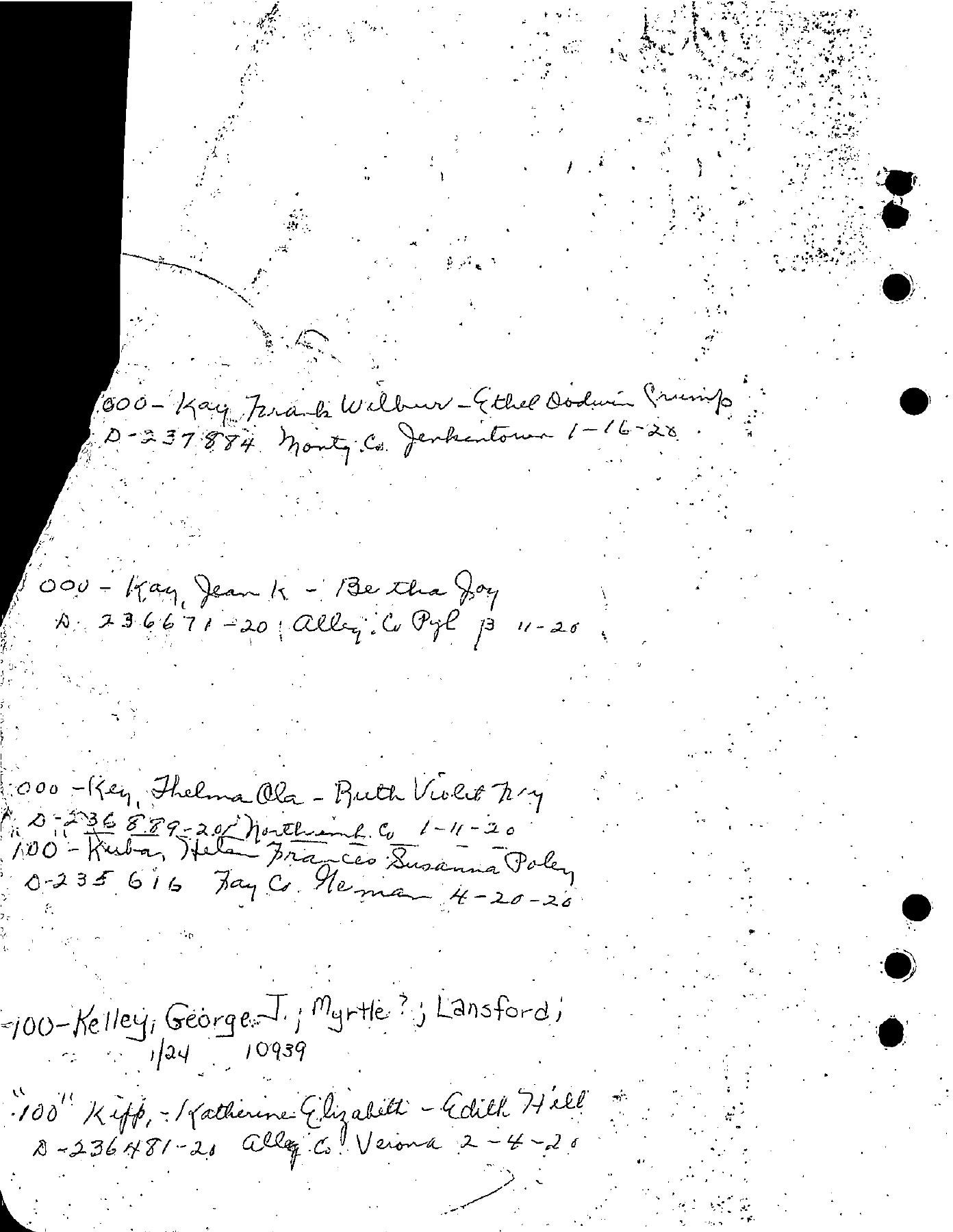
This page combines handwritten names, numbers, localities and dates. It does not reproduce the certificate’s complete questions, signatures or supporting information. Some names are difficult to read, and entries added to the index may not follow the neat alphabetic order a researcher expects. Use the original PDF to enlarge a row and inspect the neighboring entries.
Do not reconstruct a full family from this image alone. Copy the locator exactly, preserve an uncertain reading, and obtain the underlying certificate before resolving a maiden surname. The K file is just one portion of one year’s index; an unsuccessful search here says nothing about another surname group or year.
The record systems by period
| Period | Where to investigate |
|---|---|
| 1852 to 1854 | Short-lived county registration, with incomplete county coverage |
| 1893 to 1905 | County birth registers, commonly associated with Register of Wills or Orphans’ Court offices |
| 1906 onward | State birth certificates |
| Historical state records at least 105 years old | Pennsylvania State Archives public birth holdings; check current transferred years |
At the time of this guide’s source check, the State Archives lists public original birth certificates for 1906 through 1920. Its linked Ancestry image collection covers a narrower historical range, through 1917. An online database and the archive’s physical holdings therefore cannot be treated as the same collection.
How to use the index
- Establish the likely year from more than one family record.
- Open the archive’s index instructions for that year.
- Use the prescribed name arrangement; the 1906 to 1909 and 1920 indexes use Soundex.
- Inspect likely entries and record the certificate or file reference, locality and date.
- Check a digitized certificate where available or follow the archive’s request procedure for an uncertified historical copy.
- Compare the full document with the child’s baptism and the parents’ marriage.
For Polish names, calculate Soundex for the variants actually found in American records, not just a modern spelling supplied by a family tree. A transcription can merge two letters or omit the first name. Search a wider date range if a census age is approximate. Keep candidate rows separate until their parents and locality match.
What the full certificate can add
Inspect the form for the parents’ names, mother’s maiden surname, addresses, ages, occupations, birthplaces and the filing date. The information supplied depends on the year and form. Note whether the child was named immediately or through a later supplement. A birth in a hospital town can explain why the certificate differs from the family’s residence in a mining settlement.
Before 1906 or outside public archival coverage
For an earlier event, contact the county custodian and ask about the actual years of surviving birth registers. Church baptisms can be essential where county registration is incomplete. For a later birth still held by the Pennsylvania Department of Health, follow the current eligibility rules instead of applying the archive’s public historical procedure.
A negative state search for an 1898 birth is expected because it predates that system. Record which jurisdiction and series you checked before trying another source. Local newspapers, baptismal registers and delayed documentation can help establish a date, but each has its own informant and purpose.
Sources and research tools
How we can help
We compare American records with parish and civil records in Poland to establish the family connection and identify the ancestral village. See our services for the available research projects.